We talk a lot about Ed Ruscha’s Every Building on the Sunset Strip—the photographs, the accordion-fold construction, the concept, and its place among the great artist’s books of the twentieth century.
What we don’t talk about much is the silver slipcase it came in. My book remains remarkably clean. My slipcase is a mess. The adhesive has failed, the silver-wrapped construction is coming apart, and apparently I’m not alone. It’s simply one of those peculiar realities of owning a nearly sixty-year-old book—and something you rarely see in the beautiful photographs of it.
Yesterday I shared Ed Ruscha’s Every Building on the Sunset Strip. Here’s another Los Angeles book that seems like a natural follow-up: Edgar Arceneaux’s 107th Street Watts. Arceneaux revisits Ruscha’s idea from an entirely different Los Angeles—photographing the buildings along 107th Street in Watts.
Every once in a while I’m going to pull something off the shelves and show it off here. No real agenda, and not necessarily anything for sale—just books, photographs and ephemera I like having around.
This time it’s my copy of Ed Ruscha’s Every Building on the Sunset Strip, published in 1966.
Edition of 100 numbered copies. Square format (4.75 × 4.75 inches / 12.1 × 12.1 cm). Ten pages reproducing twenty-four anonymous vintage “girlie” color slides discovered in an original mail-order slide collection. Cover reproduces a Bettie Page photograph from the series.
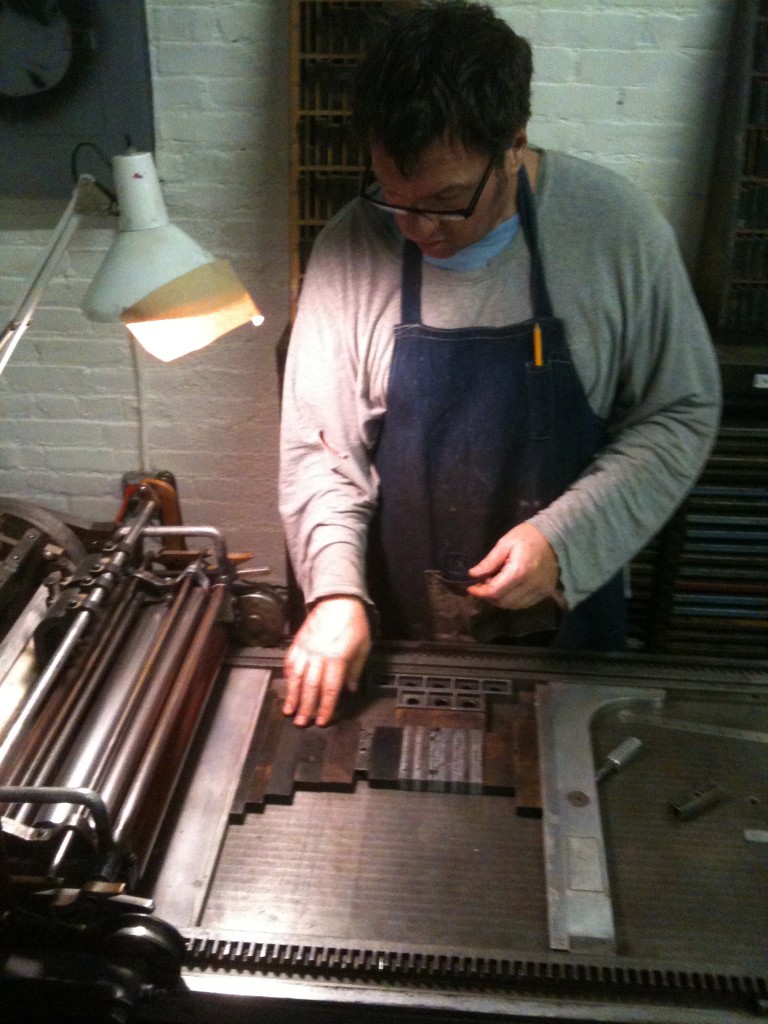
Issued in a custom heavy kraft envelope printed with a reproduction of a mail-order advertisement for the “Color Slides – Studies in Beauty” series from which the photographs possibly originated. Each copy includes a letterpress-printed addendum by Eric Kroll, hand numbered and signed by the author. The addendum was printed by Jim Camp from a polymer plate on a Vandercook SP-15 press and is laid into each copy beneath a printed belly band reading “Restricted to Adults.”
Designed, printed, and published by Jim Camp at the synaesthesia press.
Notes: The photographs reproduced in the edition are anonymous and date from approximately the mid-1950s. The project originated after finding the original box of slides at a flea market. The edition was conceived by Camp as both a contemporary artist’s book and an homage to mid-century mail-order photography.