Posted on 2 Comments

Five Things Right Now: Volta 5ive, Wallace Berman, Tombstone & More

THING 1: Volta 5ive (The Lettered Edition).

Although not called for in the colophon, this is letter “__” from an edition of 26 lettered copies, each accompanied by an original found Kodacolor print from the Halloween Party.

THING 2: Straight Up.

I was scouting a flea market a few weeks ago when I stumbled on a copy of Badfinger’s fourth record sitting in a musty box with maybe a dozen others. I don’t really bother digging through booths that specialize in records anymore. They’re just too expensive. Which is a strange thing to complain about—if records are selling (and they are), then they’re priced exactly where the market says they should be. Still, I can’t shake the memory of my own buying “heyday”: the early aughts, up through about ’05. That’s the price baseline burned into my brain. But there are still deals out there. You just don’t find them at record booths. You find them behind the table of kitchenware, next to the wobbly stools, beside a box or two of empty beer cans (anyone else collect those in the mid-’70s?). That’s where the dusty crate of mostly forgotten ’70s records lives. And that’s where you pull out a copy of Straight Up on the Apple label for four bucks. Six, if you can grab one more record to sweeten the deal. I couldn’t.

THING 3: Support The Revolution.

I pulled the Wallace Berman monograph off my shelf recently and spent an afternoon back inside it. Partly nostalgia, partly timing. Sending Volta 5ive out into the world put me in the right headspace to revisit it. My copy came off the remainder table at Moe’s in Berkeley maybe thirty-five years ago. I didn’t know anything about Berman at the time. Not even his Semina 2, which featured a Bukowski poem. Support the Revolution was my first Berman encounter. The book was published in collaboration with the Pasadena Art Museum and documents his Verifax collages, assemblages, correspondence, and the strange gravity of his orbit — Beat poets, mystics, outsiders, printers, believers, rock stars and celebrities. Call it an obsession if you want. I think of it more as a long, quiet influence that keeps resurfacing when I’m busy making things.

Thing 4: Tombstone, Arizona.

I haven’t really sat down to write anything “serious” in years. I wrote a novel that got me out of grad school. I turned that into a screenplay. I wrote maybe a dozen short stories. A couple landed in the little-little lit ‘zines of the early ’90s. Really little. Like, teeny-tiny. Then life happened. Lately I keep circling the same thought: maybe it’s time to try something substantial again. And for reasons I don’t fully understand, the right side of my brain keeps whispering Tombstone. Not the O.K. Corral version. Not the gunfights and good guys versus bad guys. I’m more interested in the other population — the sex workers with their daddies, the performers and their stages, the hucksters and con men, the preachers, the drifters, and the glorious freaks and geeks who really made the place. The Earps’ shenanigans are background at best. Which then feels like it could be an original story. And maybe the one I’ve been avoiding.

Thing 5: Erotica

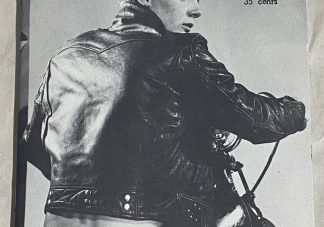
I just spent a not-insignificant amount of money on a small chunk of Eric Kroll’s erotica collection. I love this material. Not the penis-in-vagina hardcore stuff. I’m drawn to cross-dressers and spankers and spakees and leather-clad femme dommes and Bettie Page and the figures most people have never heard of — Sam Menning, Reuben Sturman, Cass Carr, Irvin and Paula Klaw, Bunny Yeager, John Willie. Then there’s the fringe legends: The Mish, Louis the Fink, Subway Pete, The Walrus, Glass-Eyed Benny (who didn’t have a glass eye — just one that “didn’t focus right”). Early producers who hired photographers like Menning, who hired models like Page, who made content that ended up in small fetish magazines like Erotique and Exotique and in 50-foot loops that ended up in the grindhouse economy of the dirty, filthy Times Square.

Now all I have to do is price it.

Posted on Leave a comment

Five Things, Right Now: Volta 5ive, Plur1bus, Train Dreams & Let It Be at 40

This is a picture of Volta 5.

THING 1: Volta 5ive

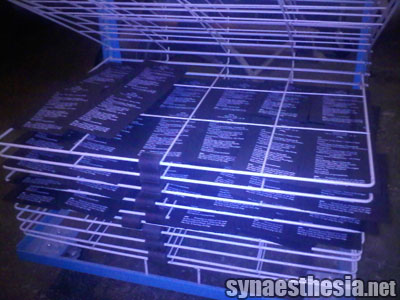
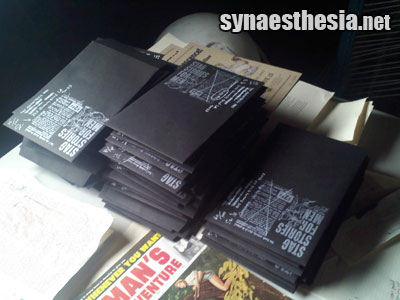
If you know me, you know I’m a huge fan of Wallace Berman. I’m an even bigger fan of Semina—his artist’s book / little magazine / zine-before-anyone-called-them-a-zine—which was (mostly) gifted to Berman’s pals. Enter Volta. It’s my response to Semina. Not that Semina needs—or deserves—a response from me. But damnit, I felt I had to. I named it after James Joyce’s business venture, The Volta: his failed movie theater in the middle of Dublin around 1910-ish. How does a movie theater fail in 1910? Especially when it’s the only one in the middle of a major European city? Joyce sure did. But then again, without failure, a lot of great fiction never gets written. But I digress. I’m up to the fifth installment of Volta. Berman got to nine Seminas. Maybe that’s when I’ll quit, too. Maybe. Anyway, if you’re reading this—and obviously you are—there’s a good chance one’s already in the mail to you.

THING 2: Plur1bus

Plur1bus, now streaming on Apple TV+, is one of the strangest and most quietly unsettling science-fiction series in recent memory. Imagine being the key to saving humanity from its own happiness. Enter Carol Sturka. She’s a best-selling pop fiction writer who hates her audience. She’s also one of just eleven humans immune from “The Joining.” And she’s the main character of one of the most original TV shows I can remember in a long time. I don’t want to give much more away, except to say it’s pretty much what you’d expect from the writer who created what is, perhaps, the greatest T.V. ever made, Breaking Bad. But this isn’t that—that’s for sure.  What Plur1bus does—quietly, patiently, and sometimes very, very slowly—is ask whether happiness without misery can ever be “happy” at all? Or even human? It’s eerie, creepy, and funny in a dry, almost irritating way. And it’s anchored by Rhea Seehorn (as Carol Sturka), who makes bitterness feel normal. You know—the same way your angry dad or brother or boss or uncle or fill-in-the-blank angry person does for you, too. Only here, it’s art.

THING 3: Train Dreams & Jay Kelly (tied)

Talk about two terrific films that, as the final credits roll, make you take a step back and reconsider not only Robert Grainier’s life or Jay Kelly’s life—but your own. At least that was my takeaway from both.

THING 4: 3 Shades of Blue

One of the things I loved most about Cameron Crowe’s memoir were his stories about musicians—not just during the interviews, but afterward, once the tape recorder was turned off. James Kaplan does something similar here, except instead of Bowie or Gregg Allman or Eagles (before the “The”), he spins tales of Miles, Coltrane, Thelonious, Bill Evans, and everyone else who mattered when jazz was at its absolute peak—say 1955 to 1970. Give or take. The difference is Kaplan wasn’t there. Somehow, it doesn’t matter. He still pulls it off.

THING 5ive: Let it Be — The 40th Anniversary

Speaking of Cameron Crowe—and I’m paraphrasing loosely here—one of the great things about music is how a favorite song can drop you back into the exact place you first heard it. In the fall of 1984, I was living next door to Ben. Ben managed a used record store. I spent a lot of time at Ben’s. And in addition to giving me a first-rate education in music, he also guided me through all sorts of (first-time-for-me, duh) recreational drug use—soundtracked by records like Let It Be. This was before big corporations told us what to stream. But again, I digress. Ben and I are still close friends. And whenever I hear “I Will Dare,” “Unsatisfied,” “Sixteen Blue,” or “Gary’s Got a Boner,” I remember Ben handing me that record forty years ago and telling me to take it home and listen to it. It’s just been reissued as a Deluxe 40th Anniversary Edition, with all sorts of cool new doo-dads added in. But honestly I’m happy with the original to go along with all my memories. (Quick aside: my photog pal Steve Diet Goedde (who’s made my list before) made a terrific pic of the band around this time and you can buy the print here.)

Posted on Leave a comment

Volta 5 | synaesthesia press

This is a picture of Volta 5.

Volta 5ive

Published December 2025 by the synaesthesia press.

Artist’s book by Jim Camp. Letterpress printed and hand-assembled. Stapled pictorial wrappers with orange wrap-around band. Issued in a numbered edition of 200 copies and a lettered edition of 26 copies. The numbered edition was distributed as a gift to friends of the synaesthesia press.

Lettered copies were hand-lettered and signed on the exterior mailing envelope and again on the wrap-around band. Each copy includes an original Kodacolor snapshot from a Southern California Halloween party photographed in 1960 and laid into the publication. Because the photographs vary from copy to copy, every example of the lettered edition is unique.

Edition of 226 copies (200 numbered; 26 lettered).

Volta 5ive continues the synaesthesia press tradition of small-run, artist-driven printed matter in which format, material, and content are inseparable. Drawing inspiration from Wallace Berman’s Semina, underground zines, the mimeograph revolution, artists’ books, Douglas Blazek, Marvin Malone, and other independent publishing experiments, the publication was produced for a small circle of readers and friends of the press.

The lettered edition was created both to help support the production of the larger run and to provide collectors with a more personal version of the publication. The inclusion of original vernacular photographs transforms each copy into a unique artifact, functioning simultaneously as publication, archive, and object.

No reprints were issued.

Design, printing, and binding by Jim Camp using found photographs.

Availability: Numbered edition out of print. Lettered copies available from the synaesthesia press.

Posted on Leave a comment

Volta 4 | the synaesthesia press

Volta No. 4 an artist's book by Jim Camp published by the synaesthesia press in Los Angeles.

Volta 4

Published 2019 by the synaesthesia press.

Artist’s book by Jim Camp. Silk-screen and letterpress printed. Hand-tied wrappers. 10 pages.

Edition of approximately 100 copies.

Volta 4 was constructed from a found school notebook discovered on a film studio set in Budapest and later transformed into an artist’s book. Additional visual elements were drawn from antique printer’s blocks acquired at the Pasadena City College Flea Market, found photography, and various hand-printing experiments.

Like the previous issues of Volta, the publication reflects an ongoing interest in altered books, flea-market ephemera, vernacular photography, and independent publishing. Particular influences include Joseph Cornell, Cy Twombly, Andy Warhol, Wallace Berman, and Berman’s legendary publication Semina, to which the entire Volta series owes a considerable debt.

The title page bears Wallace Berman’s statement: “Art is Love is God.”

Volta 4 continues the synaesthesia press tradition of small-run, artist-driven printed matter in which format, material, and content are inseparable. Produced for a small circle of readers and friends of the press, the publication functions simultaneously as book, archive, and object. Most given to friends of the synaesthesia press.

Design, printing, and binding by Jim Camp from a found printer’s block and a publicity photograph of 2 couples kissing in a car.

Availability: Limited quantities remain available from the synaesthesia press.

Posted on Leave a comment

Volta No. 3 (Busty Pin-ups!) | synaesthesia press

Volta No. 3: Busty Pin-ups! artist's book by Jim Camp published by the synaesthesia press in Los Angeles in 2016.

Volta No. 3: Busty Pin-ups! (2016)

Artist’s book by Jim Camp.

Issued by the synaesthesia press, Los Angeles, 2016.

3½” × 6¼”. Edition of 250 numbered copies. Twenty-six lettered copies were issued with an original collage. One copy was bound in boards and contains the original collages used in the production of the book.

The work consists of a sequence of original collage compositions created from vintage cheesecake and pin-up imagery mounted onto pages removed from a found Blue & Gold Incentive stamp book. Designed as an artist’s book rather than a conventional literary publication, the work reflects Camp’s longstanding interest in found material, vernacular American smut culture, and collage.

The majority of the edition was distributed at the opening reception for Sexual Fictions at These Days Gallery in Los Angeles. Copies were handed to attendees by dominatrix Bettie Bondage and her slave.

The title Volta derives from James Joyce’s short-lived Dublin cinema venture of 1909 and, like Wallace Berman’s Semina, was conceived as an assemblage publication.

Availability: Please inquire.

Posted on Leave a comment

Volta 2 | synaesthesia press

Volta 2, a 2009 synaesthesia press mixed-media portfolio containing poetry, fiction, photography, found imagery, artwork, and printed ephemera housed in an illustrated envelope.

Published 2009 by the synaesthesia press.

Portfolio. Approximately 6″ × 9″ (15.2 × 22.9 cm). Housed in a black envelope illustrated with a vintage men’s magazine advertisement printed using Print Gocco. Edited, designed, printed, and assembled by Jim Camp and Nathan Feller. Published by the synaesthesia press.

Edition of 100 copies printed at the synaesthesia press in Tempe, Arizona and Los Angeles, California.

In addition to the printed colophon, the contents include the artwork “Welcome! Well, Hello!” by Nathan Feller; the short story “Natural Sines & Cosigns, Tangents & Cotangents (A Love Story)” by Jim Pritchard; the photograph “Herbert Huncke Smoking a Sherm in the Back of a NYC Cab” by Laki Vaz; a found photograph digitally altered by Jim Camp; a found, color transparency selected by Jim Camp; and poems by Henry Tokarski (“Black Spring”), Marie Kazalia (“No Elvis Sightings”), Charles Bukowski (“Untitled”), Richard Brautigan (Widow’s Lament”), and Henry Denander (“Workth”). Most letterpress printed.

The second issue of Volta marked a transitional moment in the history of the press, produced in the middle of its move from its second Arizona period to its Los Angeles period. Conceived as a mixed-media portfolio rather than a traditional literary magazine, the publication brought together contemporary writing, found imagery, photography, visual art, and ephemera in a format heavily indebted to Wallace Berman’s Semina, as well as mail art, and other experimental assemblage publications.

Unlike the later issues of Volta, the first two function as an open container for disparate voices and forms, emphasizing juxtaposition, surprise, and the relationship between text and image.

“Art is Love is God.”

Availability: Out of print.

Posted on Leave a comment

Volta 1 | synaesthesia press

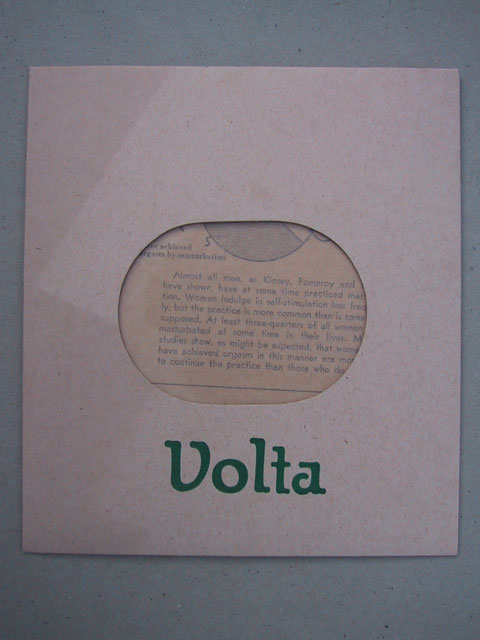
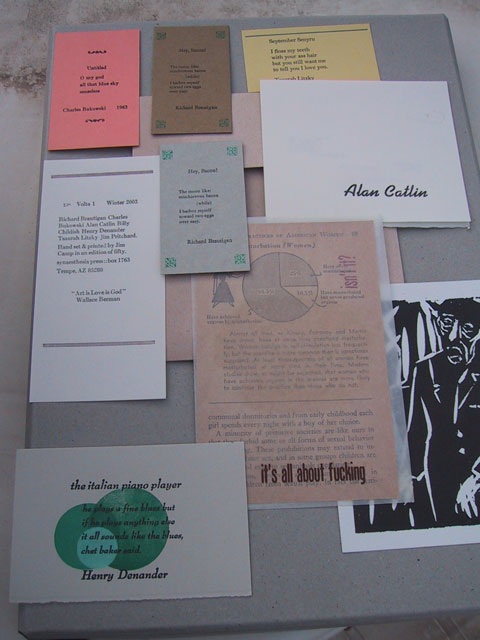
Volta Winter 2003 letterpress portfolio edited and printed by Jim Camp featuring works by Charles Bukowski, Richard Brautigan, Billy Childish, Alan Catlin, Tsaurah Litzky, Henry Denander, and Jim Pritchard.

Volta. Winter 2003.

Edited and letterpress printed by Jim Camp.

Issued in an edition of 50 copies. Eight separate printed pieces housed in a found envelope measuring approximately 6¼” × 7″.

Contents include:

  • Charles Bukowski, “Untitled” (1963).
  • Richard Brautigan, “Hey, Bacon!”
  • Alan Catlin, untitled poem
  • Tsaurah Litzky, “September Senryu”
  • Henry Denander, “the italian piano player”
  • Jim Pritchard, “It’s All About Fucking” (a found / printed piece)
  • Letterpress-printed colophon featuring the Wallace Berman quotation “Art is Love is God.”
  • (The Billy Childish poem/flyer “w.s. burrows” may or may not have been included. The publisher had started to give them away in various forms around this time. They were overs from the Barry Gifford project The Strangest One of All with the Childish poem printed at a later date on the verso.)

Housed in a found envelope with all components issued loose as published.

Produced as an homage to Wallace Berman, whose work and assemblage aesthetic were a significant influence on the editor and publisher. The title Volta was borrowed from James Joyce’s short-lived Dublin cinema venture of the same name, opened in 1909 and remembered today largely as one of the author’s more unusual failures.

Availability: Out of print.