Posted on Leave a comment

5 Things Right Now: Lurie, Flea, Basquiat, and the Film That Lingers.

The Lounge Lizards in 1981 Photo by David Corio/Michael Ochs Archive/Getty Images

THING 1:  The History of Bones AudioBook Version.

Before I get into why I prefer audiobooks read by the author, I should credit the Lounge Lizards photo above, taken in 1981, to David Corio/Michael Ochs Archive/Getty Images. I wish I could have seen them live, but in 1981, if someone had put on a Lounge Lizards record at a party, I would’ve been the guy who changed it. My first record collection had a decent run of spoken word LPs, but only if the author was doing the reading. No Basil Rathbone reading Milton. Give me Kurt Vonnegut reading from Breakfast of Champions. Or ee cummings reading his own work. And now it’s John Lurie reading The History of Bones. I read the book when it came out a few years ago. Now I’m letting him read it back to me. When the author reads their own work, it just lands differently. Which makes sense, right? Book or audiobook, I give this one 5 outta 5.

THING 2: The Bombardment.

A few days later and it’s still with me. It starts quiet. Then there’s The First Mistake. Then it just things just…unfold. What stayed with me wasn’t strategy or war or anything like that—it was the kids. The smallness of their world, and how quickly that can all disappear. I’m not trying to make a political point here, but during the excruciating last 20 minutes or so, I couldn’t help but think about that recent tragedy in Iran—the girls’ school. Same feeling. Different place, different time, same outcome. Kids caught in something they didn’t choose. You’re aware there’s films you watch and move on from. And there’s ones that linger. It’s on Netflix btw.

THING 3:  Honora.

I’ve had Flea’s record on repeat since it dropped. And sure—this one hits my jazz nerve. It actually honors jazz. Loose, spacious, musician-forward. The kind of record I can sit with or let run in the background while I work—which is why I love jazz so much. What it really shows is Flea’s range. Not just as a bassist, but as a listener—someone who knows when to step forward and when to leave space. The cover of Wichita Lineman (Glen Campbell!) with Nick Cave is the standout. The track with Thom Yorke is strong, too. Maggot Brain! A Frank Ocean cover!! This is Flea outside his band, and I think he’s terrific.

THING 4:  Hillel Slovak.

Since I’m writing about Flea, it makes sense to mention the Red Hot Chili’s documentary. It ends up being as much about Hillel Slovak as it is about the band—tracing things from before they were fully formed up through Blood Sugar Sex Magik. I was lucky enough to see Hillel play twice and then a handful of times later with John Frusciante. They’ve always been great live. But with Hillel, they really were something else. Even if you weren’t a fan of the music. Of course a big part of that were the small venues. Catching those early shows was predictable in the most unpredictable way, if that makes any sense. That version of the band—the one still figuring itself out—that’s the one I still think about when I think about RHCP. It’s also on Netflix btw.

THING 5: Jean-Michel Basquiat: The Making of An Icon.

Anything Basquiat grabs my attention; so, when I was in a bookstore the other day, I picked up Kenny Schachter’s book. I flipped it open at random and landed right on the section after Basquiat’s overdose. That stretch where his apartment gets picked over by the “friends” who knew he was gone. Then his father steps in. Finds the key to a storage locker holding nearly 200 paintings. And that’s when the real work starts. Taxes unpaid. An estate suddenly worth real money. And the part no one really talks about—the business of art. I’ve been just as fascinated with art as a business as living with art. How do you handle that much inventory without collapsing the market? How do you build a collector base after the artist is gone? How do you turn all that chaos into something valuable? Basquiat’s story doesn’t end with his death. It’s where the business of Basquiat really begins.

Posted on Leave a comment

Five Things Right Now: Kiki, Peaches, Blue Note Jazz & Sci-Fi

A picture of the cover of Kiki's Memoirs

THING 1: The Education of a French Model — Kiki’s Memoirs Introduced by Ernest Hemingway (Bridgehead Books / Seven Siren’s Press edition).

I’m almost through Memoirs of a French Model. My copy is a later  edition and one marketed as an Ernest Hemingway title. I mean just look at it. And I’ll admit—after reading Hemingway’s introduction, I had a moment where I thought: did Hem actually write this? And if he did, was the whole affair a little… transactional? Kiki was more than just a “muse.” She was a sex worker in Montparnasse—as well as a model, performer, and survivor. And I don’t think it’s crazy to wonder what the real exchange was here. An introduction from Hemingway carries weight, even in 1929 when this book was first published. And Kiki had something to sell. The book itself? It’s OK. Interesting in spots. Not exactly great. Far too brief. She introduces us to characters that you have to research a bit; I would have preferred Kiki telling me about them instead. Then you hit the middle section of this edition. And suddenly you’re not in her memoir anymore—you’re in a “dirty book.” Full-page photographs of nude women presented as “Kiki’s Friends”; in other words, nudes pulled from a stock photography house. Models Kiki didn’t know and who had no idea their naked images would be folded into The Mythology of Montparnasse. Which is what makes this edition so cool. It’s not just a memoir—it’s part literary artifact, part soft core porno (although kinda hardcore for 1955), and part marketing sleight-of-hand. (I won’t even go into the Sam Roth story.) A “dirty book” dressed up as a legitimate Hemingway title—a trick to both sell it and dodge U.S. obscenity laws. Which is exactly why I love it.

THING 2: Peaches — No Lube, How Rude!

It’s been a decade since her last record and twenty-six years since her first and Peaches, at 52, is still creating, still pushing, and still making people uncomfortable. She changed outfits throughout her show—each one landing somewhere between Berlin’s KitKatClub and performance-art-as-fashion. The crowd skews wide—people who’ve been there since The Teaches of Peaches, mixed with younger kids who were in diapers when it first dropped. But everyone understands the assignment: participation, not observation. A Peaches show is a reminder that when live music really works, it’s as much about the performance as it is about the music.

THING 3: The Opener — Curtis Fuller.

I’ve been spending time with The Opener, part of that Blue Note 1500 run I can’t seem to leave alone. Jazz, for me, does two things: it holds up to close listening, but it’s also the only music I can leave on while I work without it getting in the way. I found The Opener the way I usually find music—chasing a label as much as the sound. The 1500 series has a reputation that goes beyond collectibility, and once you start hearing why, it’s hard to stop. They’re not just good—they’re consistent in a way that makes you wonder how they were put together. Then you look at Fuller’s lineup for The Opener: Hank Mobley, Bobby Timmons, Paul Chambers, Art Taylor. Fuller didn’t fuck around. Neither did Blue Note.

THING 4: Project Hail Mary.

The last time I spent any time with Project Hail Mary was reading the book soon after it was published—the first sci-fi I’d read since Philip K. Dick. Truth is, Andy Weir and PKD are about the extent of my sci-fi reading experience. (I don’t count Slaughterhouse-Five as sci-fi.) My brother first made me aware of Weir after reading and raving about The Martian years ago. (The Martian is part of the Mountain Range of Unread Books that lies due east of my bed.) We all know the cliché—books are better than movies—just like we all know how clichés come to be. So yea. In this case, the movie respects the source without feeling stiff, overfaithful, or commandeered by a heavy-handed, know-it-all director. Which, for me, is plenty! I’m not looking for reinvention—I just want to feel like I’m back inside the story again for a couple hours. Side note: always mix your popcorn with plain M&M’s.

THING 5: Kiki’s Memoirs—Introduction by Ernest Hemingway  (Black Manikin Press edition).

At the onset of reading The Education of a French Model, of course I got pulled into the object as much as the text. And the story about the book, which I’ve learned is often as compelling as the story in a book. Which, of course, sent me down the path of the true first edition in English, published in 1930 Paris by Edward W. Titus at his Black Manikin Press. Which, of course, led me to a copy I couldn’t pass on…of course. Unread, unopened, the fragile glassine jacket and original red wrap-around band still intact, coming out of a noted Ernest Hemingway collector’s library, all housed in a custom black leather slipcase! I’ll call it a flex—or sheepishly admit—the slipcase probably cost that collector more than I paid for the whole she-bang. How could I pass on that?! But it makes me wonder about Hemingway’s collectibility in 2026. Does anyone care about Hemingway anymore? A rhetorical question, of course. All I care about is how effin’ cool this book is. Side note: if I could set the dial on a time machine, I’m going straight to 1920 Montparnasse…and just for the decade, please.

Posted on 2 Comments

Five Things Right Now: Dream Syndicate, Dylan, Costello, Kinks & The Sound

THING 1: The Dream Syndicate — The Days of Wine and Roses (1982)

In last week’s Five Things I mentioned something I’ve started doing in the mornings: listening to a record I don’t know by a band I do. And since coming up with five new “things” on any sort of regular basis isn’t as easy as it sounds (for me, anyways), I figured I’d keep it simple this time—five records I’ve spent time with this week. Some of which I’m guessing you don’t know either. And remember, I ain’t no music critic. I just love music. So—keep that in mind what I ask, do remember The Dream Syndicate? Cause I do. But I’d never actually sat down with any of their records. The Days of Wine and Roses sounds like a lot of records you’re probably familiar with… made long after this one. Which is a good thing.

THING 2:  Bob Dylan & The Band — Before the Flood (1974)

Before the Flood is Dylan’s live album from his ’74 tour with The Band—and here’s what struck me on my first (and only) listen: it’s full of his hits. The last time I saw Dylan, well over a decade ago at the Hollywood Palladium, that was exactly what he avoided playing. So have things changed since 2009? I know he’s still out there, still touring. Imagine that. Part of me thinks Dylan wants to make his exit on the road—which, if I were him, is exactly how I’d want to go too. In the back of a touring bus… somewhere between Cleveland and Nashville.

THING 3: Elvis Costello — All This Useless Beauty (1996)

This one caught me off guard. Quiet, restrained—almost delicate in places. Not the Costello I usually reach for. Which is to say, don’t go into it expecting “Watching the Detectives.” But “Complicated Shadows”—there’s something about it that just settles in. One of those songs that doesn’t demand attention… but ends up holding it anyway. I’m glad I found this record.

THING 4: The Sound — from the lion’s mouth (1981)

I kinda broke my rule here. Up to this listen, I didn’t know anything about The Sound. Couldn’t even tell you where they’re from (I assume England). But I do know Harold Bloom’s idea of “the anxiety of influence”—the notion that artists are always wrestling with what came before them. Sometimes to the point of imitation. Which is a polite way of saying they’re still searching for their own voice. It’s a tough thing to shake. As creatives, we all know that. It’s unavoidable. But listening to this, I kept thinking: if I want to hear The Cure or Joy Division—with U2’s Bono fronting—I’ll just put on The Cure or Joy Division and imagine the rest. Which is a polite way of saying From the Lion’s Mouth is, for me, a one-and-done.

THING 5: The Kinks — Muswell Hillbillies (1971)

Muswell Hillbillies is The Kinks leaning into Ray Davies’ love of character sketches—oddball Londoners, working-class survivors, people who feel like they’ve stepped out of a pub story. It’s funny, a little melancholy, and packed with detail. A strange record, too. It just kind of wanders along, telling stories. Which makes it a pretty great soundtrack for my morning mile with Molly.

Posted on 2 Comments

Five Things Right Now: Valley Art Theatre, Blood Meridian, Meat Puppets & 33⅓ Books

THING 1: Jitney.

I recently saw Jitney. I’m not much of a theater guy. I think if I lived in Manhattan, I’d be a theater guy. My friend Mark a theater guy. He’s my go-to when it comes to Everything Theater. He knows what’s great and has never steered me wrong. When I get to spend time in my most favorite city in the world, Mark and I usually go on a ManDate, usually off Broadway, usually to attend the theater. We’ve seen some terrific performances. So when he told me August Wilson’s acknowledged masterpiece was playing in Phoenix, I took my mom. On a MomDate. To see Jitney. Cause ManDates and MomDates are just about all the Hot Action I get these days. And of course Mark was right. Set in a 1970s Pittsburgh “jitney” — a cab stand for unlicensed taxis that pick up customers in neighborhoods a Yellow Cab won’t — it’s about work, pride, fathers and sons. The most surprising part? Decent theater in Phoenix, Arizona! Good things do happen outside NYC. Sometimes. That’s a joke. Kind of.

THING 2: The Single-Screen Theater.

A few days ago I drove past the Valley Art on Mill Avenue in Tempe. It’s shuttered. Dark. The marquee still has letters on it though—big, black, and in all caps: MOVIES ARE FOREVER. SEE YOU SOON. For decades the Valley Art was the last single-screen theater still standing and in operation in the Phoenix area. You’ve probably seen a movie in a single-screen. My first visit there was to catch The Atomic Café, my freshman year at ASU in the fall of ’82. But it was also where I saw one of my first punk shows. I grew up an arena rock kid—Styx, REO Speedwagon, The Who, BÖC. Thousands of people. Giant stages. The dank smell of weed a few minutes after the lights dimmed. Always a good fist fight in the parking lot after the show. But I digress. I caught the Meat Puppets at the Valley Art in November of ’84 with maybe a hundred other people in the room. I couldn’t get over the fact that, if I wanted to, I could actually reach out and touch the band. But I digress. I still love the experience of a movie in a theater. Last one for me was Nürnberg, through it all knowing it’s better here than streaming at home. But the Valley Art is a dinosaur, and we all know how large corporations feel about dinosaurs.

THING 3: The 33⅓ Series.

If you’re into music, the 33⅓ series is one of the more interesting publishing projects of the last twenty years. Each book focuses on a single album—sometimes a famous one, sometimes something a little more obscure—and the writers take wildly different approaches to it. Some read like memoirs. Others are cultural history. A few are almost like long essays about why a particular record mattered at a certain moment. The one I’m currently peddling is the Colin Meloy signed volume on his take of Let It Be by the Replacements. If you know the record, you know why it deserves a book. If you don’t know the record, the book is a pretty good place to start. A better place to start, of course, is with Let It Be. Anyway, an album you love and see if someone’s written a 33⅓ book about it. Chances are they have. It’s a fun way to spend an afternoon with a record you already know. I’m digging into Bruce Eaton’s take on Big Star’s Radio City.

THING 4: Listening to a Record I Don’t Know by a Band I Do.

I’m not a morning person. And I’m certainly not a morning-exercise person. But every now and then I manage to drag myself out of bed for my “morning mile with Molly.”  My pooch Molly loves her morning walks, and so do I.  Lately—with airbuds firmly inserted—I’m listening to something I don’t know much about. I’ve probably heard of the band. Or know a band’s famous record or two. But my general, self-imposed rule for My Morning Mile with Molly: Listen to a Record You Don’t Know by a Band You Do. This morning it was the 13th Floor Elevators—Easter Everywhere. 13th Floor Elevators! Love their first record. Never heard a lick on their second. I’ve never even heard of Easter Everywhere. And you know what? This sort of thing just…lands differently. I really can’t explain it any better than that. So this week pick a record you don’t know by a band you do and listen. On a walk. In the car. At your coffee shop. I’m learning the best way to really discover a band is by listening to the records I’ve skipped…for whatever reason.

THING 5: Blood Meridian

I’m rereading McCarthy’s masterpiece—mainly cause of my recent obsession with Tombstoneand, just as I remember, it is the most brutal book I’ve ever read. Dead babies hanging from trees. Eyes pulled from their sockets. The terrifying episode at the end of Chapter 4 when the Kid and his crew are slaughtered by the Comanches. The violence is relentless, and McCarthy doesn’t treat the American West the way most Western novels do. No romance. No heroic gloss. Pretty much everyone is a bad guy and his West seems older, harsher, and completely indifferent to the people moving through it. I love it. If you don’t know the book, McCarthy’s story unfolds mostly across the Texas–Mexico borderlands in the late 1840s, following a gang of scalp hunters through deserts and badlands. The land dominates everything, and McCarthy’s landscape is as much a character as anyone in the book. Give it a try. It’s not an easy book; meaning, it’s violent and unsettling and sometimes it feels more like a surrealistic fever dream than a traditional novel and every once in a while I do get a tiny-bit annoyed with McCarthy’s Faulknerian prosey. Just feels a little forced is all. But I’m no lit critic, and if you’re interested in the mythology of the American West, you won’t find a darker—or more honest—version of it anywhere.

Posted on Leave a comment

Five Things, Right Now.

THING 1: The Dusty Ramblers Project.

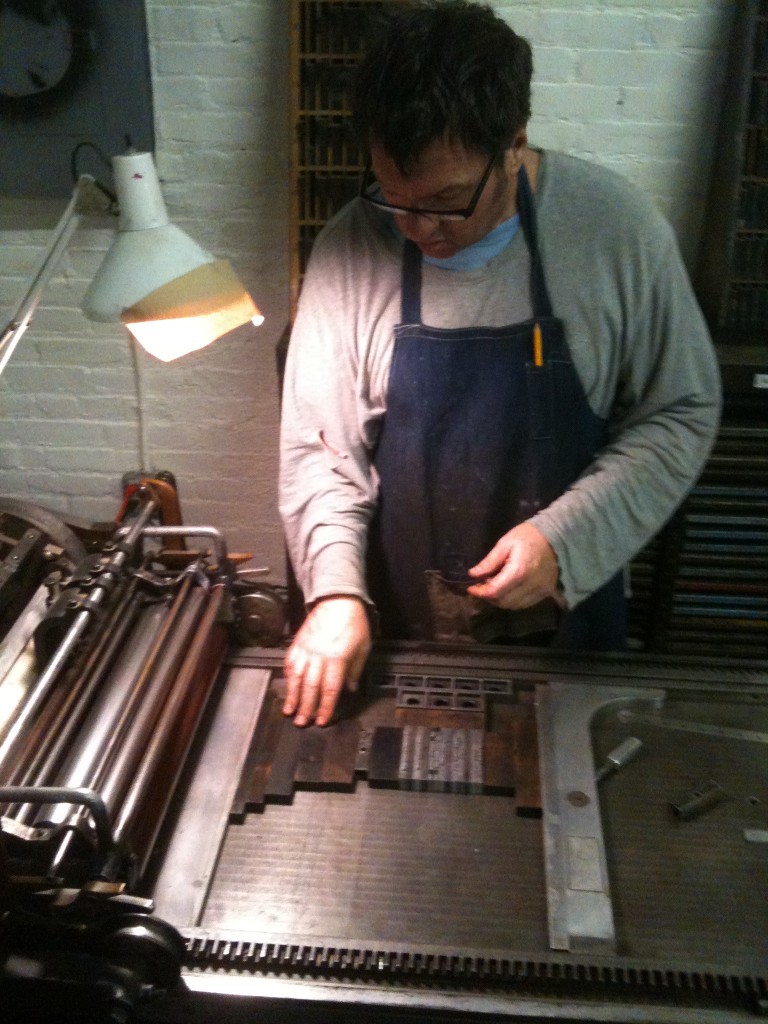
The band is part of what I’m calling “the CattleTrack Scene” — although I’m sure I’m not the only one calling it that. The CattleTrack Scene: the creatives orbiting in-and-around (about) a 2-mile strip of road called Cattletrack in Scottsdale, where the desert homes (among them is Fritz Scholder’s estate), studios, and back-porch stages blur together and the art feels very much lived. If I had to label them, I’ll borrow one and call The Ramblers “Sonoran Americana”: pedal steel and acoustic guitars under open sky and violins and petal-steel guitars that breathe in our warm air and don’t really ask for a whole lot of attention. Their sets move easily between covers I forgot I loved and originals that sound like they’ve been around even longer than the band’s “many years” of playing together. Big bonus points here: one of the band’s members, Brent Bond, runs Santos Press, so yea…I’m partial to The Ramblers due to Brent’s work both singing with them as well as pulling paper through his Vandy Universal 1.

THING 2: Heroic Harry and His Partner Blasting Boy.

I’m a collector. Have been my whole life. But you know this. I can’t remember, though, if I told you it started with my love of comics — specifically The Hulk and Daredevil — when I was maybe 9 or 10 years old. They’re the first thing I ever collected. Here’s something I know I’ve never mentioned: I loved them so much, I even attempted to draw my own. Fast forward to 2010-ish. I’m poking around one of my favorite, SoCal flea market haunts when I stumble upon a stack of discarded paper. Among that paper? Heroic Harry and His Partner Blasting Boy. Pencil on lined paper, 2 issues staple-bound, multiple covers, logos, issue numbers, villains, time-warps — a fully realized comic book universe imagined by some unknown kid who believed in his characters enough to publish them under the proud banner of “Bravo Comics Group.” I’ve held onto it all these years because it reminded me of my childhood, when I did the exact same thing: folded notebook paper in half, invented my own superhero, numbered the issues like collectors would someday argue over them. There’s something very honest about that level of conviction.

THING 3: Michael Rutter’s Upstairs Girls: Prostitution in the American West.

Whory Dory. Rockin’ Chair Emma. Poker Alice. Fuzzy Girl. Little Gertie. Cuttin’ Lil’ Slasher. Big Nose Kate. Those names aren’t pulp inventions. They’re pulled from documents — arrest records, city directories, newspapers — and they live again in Michael Rutter’s Upstairs Girls: Prostitution in the American West, which has been sitting on my nightstand…when it’s not sitting on my lap. Rutter’s book is less moral judgment and more ledger book: who worked where, what they charged, how they moved from boomtown to boomtown as mining camps rose and collapsed. Prostitution in the West was infrastructure: brothels stood near saloons, hotels, assay offices. Women rented cribs, upstairs rooms, and paid city fines and license fees, navigated madams, pimps, lawmen, gamblers, and the steady churn of silver and gold money. In Tombstone around 1880, they were as much a part of the street life as the Cowboys and the Earps or walking up Allen or Toughnut to Hop Town to score some opium under gaslight lamps.

THING 4: The Annual VNSA Book sale

The VNSA Book Sale is tomorrow, which means I’ll be up crazy-early — a rare event unless I’m catching a flight to Paris, Amsterdam, or, paybe, New York City. Short of a flea market at dawn, this is about the only thing that pulls me out of bed before sunrise. The sale is put on by the Volunteer Nonprofit Service Association, a Phoenix organization that began in 1957 to support the Visiting Nurse Service, raising money to provide in-home healthcare for people who needed it most. What started as a modest fundraiser has grown into one of the largest used book sales in the Southwest, filling the Arizona State Fairgrounds with tens of thousands of donated volumes. In recent years they’ve added a “rare book” section — which, yes, will be my first stop — but I’m just as excited about the art book tables and the long rows of hardback fiction where some real surprises tend to hide. Massive sales like this are democratic in the best way: high and low sharing the same folding tables, treasures misfiled, forgotten first printings sandwiched between book club editions. It’s part treasure hunt, part civic ritual, and part reminder that books still circulate hand to hand in this desert city. Did I mention the massive line to get in?

THING 5: The Discipline of Letting Things Go.

I don’t really need the money I earn from selling books. It’s a nice supplement to whopping Social Security check, sure, but that’s not why I get up early for flea markets or wander into junk shops. It’s my idea of rescuing things. And I use that word deliberately. So much paper ephemera — books, handmade comics, forgotten art — is one bad decision away from a dumpster. I’ve always felt a kind of obligation to intervene. But lately I’m learning that rescue doesn’t mean permanent custody. Some of the things closest to me — the Heroic Harry comic I held for fifteen-odd years, the record collection I swore I’d never break down, books I loved enough to read twice — eventually deserve to move on. Letting go is its own discipline. It clears space. It sharpens taste. It reminds me that collecting isn’t about possession; it’s about stewardship. I get to hold something for a while, appreciate it, understand it, then send it back out into the world. What’s next? Maybe even the books inscribed to me. Why not. If I’ve learned anything, it’s that the story doesn’t end when an object leaves my shelf.

Sometimes that’s when it actually begins again.

Posted on 2 Comments

Five Things Right Now: Volta 5ive, Wallace Berman, Tombstone & More

THING 1: Volta 5ive (The Lettered Edition).

Although not called for in the colophon, this is letter “__” from an edition of 26 lettered copies, each accompanied by an original found Kodacolor print from the Halloween Party.

THING 2: Straight Up.

I was scouting a flea market a few weeks ago when I stumbled on a copy of Badfinger’s fourth record sitting in a musty box with maybe a dozen others. I don’t really bother digging through booths that specialize in records anymore. They’re just too expensive. Which is a strange thing to complain about—if records are selling (and they are), then they’re priced exactly where the market says they should be. Still, I can’t shake the memory of my own buying “heyday”: the early aughts, up through about ’05. That’s the price baseline burned into my brain. But there are still deals out there. You just don’t find them at record booths. You find them behind the table of kitchenware, next to the wobbly stools, beside a box or two of empty beer cans (anyone else collect those in the mid-’70s?). That’s where the dusty crate of mostly forgotten ’70s records lives. And that’s where you pull out a copy of Straight Up on the Apple label for four bucks. Six, if you can grab one more record to sweeten the deal. I couldn’t.

THING 3: Support The Revolution.

I pulled the Wallace Berman monograph off my shelf recently and spent an afternoon back inside it. Partly nostalgia, partly timing. Sending Volta 5ive out into the world put me in the right headspace to revisit it. My copy came off the remainder table at Moe’s in Berkeley maybe thirty-five years ago. I didn’t know anything about Berman at the time. Not even his Semina 2, which featured a Bukowski poem. Support the Revolution was my first Berman encounter. The book was published in collaboration with the Pasadena Art Museum and documents his Verifax collages, assemblages, correspondence, and the strange gravity of his orbit — Beat poets, mystics, outsiders, printers, believers, rock stars and celebrities. Call it an obsession if you want. I think of it more as a long, quiet influence that keeps resurfacing when I’m busy making things.

Thing 4: Tombstone, Arizona.

I haven’t really sat down to write anything “serious” in years. I wrote a novel that got me out of grad school. I turned that into a screenplay. I wrote maybe a dozen short stories. A couple landed in the little-little lit ‘zines of the early ’90s. Really little. Like, teeny-tiny. Then life happened. Lately I keep circling the same thought: maybe it’s time to try something substantial again. And for reasons I don’t fully understand, the right side of my brain keeps whispering Tombstone. Not the O.K. Corral version. Not the gunfights and good guys versus bad guys. I’m more interested in the other population — the sex workers with their daddies, the performers and their stages, the hucksters and con men, the preachers, the drifters, and the glorious freaks and geeks who really made the place. The Earps’ shenanigans are background at best. Which then feels like it could be an original story. And maybe the one I’ve been avoiding.

Thing 5: Erotica

I just spent a not-insignificant amount of money on a small chunk of Eric Kroll’s erotica collection. I love this material. Not the penis-in-vagina hardcore stuff. I’m drawn to cross-dressers and spankers and spakees and leather-clad femme dommes and Bettie Page and the figures most people have never heard of — Sam Menning, Reuben Sturman, Cass Carr, Irvin and Paula Klaw, Bunny Yeager, John Willie. Then there’s the fringe legends: The Mish, Louis the Fink, Subway Pete, The Walrus, Glass-Eyed Benny (who didn’t have a glass eye — just one that “didn’t focus right”). Early producers who hired photographers like Menning, who hired models like Page, who made content that ended up in small fetish magazines like Erotique and Exotique and in 50-foot loops that ended up in the grindhouse economy of the dirty, filthy Times Square.

Now all I have to do is price it.

Posted on Leave a comment

Five Things, Right Now: Volta 5ive, Plur1bus, Train Dreams & Let It Be at 40

This is a picture of Volta 5.

THING 1: Volta 5ive

If you know me, you know I’m a huge fan of Wallace Berman. I’m an even bigger fan of Semina—his artist’s book / little magazine / zine-before-anyone-called-them-a-zine—which was (mostly) gifted to Berman’s pals. Enter Volta. It’s my response to Semina. Not that Semina needs—or deserves—a response from me. But damnit, I felt I had to. I named it after James Joyce’s business venture, The Volta: his failed movie theater in the middle of Dublin around 1910-ish. How does a movie theater fail in 1910? Especially when it’s the only one in the middle of a major European city? Joyce sure did. But then again, without failure, a lot of great fiction never gets written. But I digress. I’m up to the fifth installment of Volta. Berman got to nine Seminas. Maybe that’s when I’ll quit, too. Maybe. Anyway, if you’re reading this—and obviously you are—there’s a good chance one’s already in the mail to you.

THING 2: Plur1bus

Plur1bus, now streaming on Apple TV+, is one of the strangest and most quietly unsettling science-fiction series in recent memory. Imagine being the key to saving humanity from its own happiness. Enter Carol Sturka. She’s a best-selling pop fiction writer who hates her audience. She’s also one of just eleven humans immune from “The Joining.” And she’s the main character of one of the most original TV shows I can remember in a long time. I don’t want to give much more away, except to say it’s pretty much what you’d expect from the writer who created what is, perhaps, the greatest T.V. ever made, Breaking Bad. But this isn’t that—that’s for sure.  What Plur1bus does—quietly, patiently, and sometimes very, very slowly—is ask whether happiness without misery can ever be “happy” at all? Or even human? It’s eerie, creepy, and funny in a dry, almost irritating way. And it’s anchored by Rhea Seehorn (as Carol Sturka), who makes bitterness feel normal. You know—the same way your angry dad or brother or boss or uncle or fill-in-the-blank angry person does for you, too. Only here, it’s art.

THING 3: Train Dreams & Jay Kelly (tied)

Talk about two terrific films that, as the final credits roll, make you take a step back and reconsider not only Robert Grainier’s life or Jay Kelly’s life—but your own. At least that was my takeaway from both.

THING 4: 3 Shades of Blue

One of the things I loved most about Cameron Crowe’s memoir were his stories about musicians—not just during the interviews, but afterward, once the tape recorder was turned off. James Kaplan does something similar here, except instead of Bowie or Gregg Allman or Eagles (before the “The”), he spins tales of Miles, Coltrane, Thelonious, Bill Evans, and everyone else who mattered when jazz was at its absolute peak—say 1955 to 1970. Give or take. The difference is Kaplan wasn’t there. Somehow, it doesn’t matter. He still pulls it off.

THING 5ive: Let it Be — The 40th Anniversary

Speaking of Cameron Crowe—and I’m paraphrasing loosely here—one of the great things about music is how a favorite song can drop you back into the exact place you first heard it. In the fall of 1984, I was living next door to Ben. Ben managed a used record store. I spent a lot of time at Ben’s. And in addition to giving me a first-rate education in music, he also guided me through all sorts of (first-time-for-me, duh) recreational drug use—soundtracked by records like Let It Be. This was before big corporations told us what to stream. But again, I digress. Ben and I are still close friends. And whenever I hear “I Will Dare,” “Unsatisfied,” “Sixteen Blue,” or “Gary’s Got a Boner,” I remember Ben handing me that record forty years ago and telling me to take it home and listen to it. It’s just been reissued as a Deluxe 40th Anniversary Edition, with all sorts of cool new doo-dads added in. But honestly I’m happy with the original to go along with all my memories. (Quick aside: my photog pal Steve Diet Goedde (who’s made my list before) made a terrific pic of the band around this time and you can buy the print here.)

Posted on Leave a comment

Ed Ruscha’s Bookworks Shaped My Los Angeles.

A photo of the Edward Ruscha artist's book "Some Los Angeles Apartments" in the second edition.

I left Los Angeles a little over a year ago after spending nearly two decades there. The first few years were an adjustment; after that, I fell in love with the place. Handling an Ed Ruscha title this week reminded me why. Ruscha didn’t just photograph Los Angeles—he caught the rhythms and feelings of the city, the odd angles, the way sunlight can make even a quiet, empty balcony feel like a place.

His bookworks are a big influence. The simplicity, the restraint, the nerve it takes to publish a book “about nothing.” And every time one passes through my hands, I’m right back in my old L.A.: art openings that felt more like neighborhood gatherings, where artists and art nerds and dealers and collectors and people who just liked strange, beautiful things all mixed together without (or with) trying too hard.

Ruscha’s books—especially the L.A.-centric ones—shaped the way I look not only at Los Angeles but how I look at printed matter, photography, and the idea of place in art. Some Los Angeles Apartments, Every Building on the Sunset Strip, and Nine Swimming Pools still hit me the same way: as books that go beyond their supposed simplicity and serve as reminders of a city that rewards anyone willing to slow down, pay attention, and let it seep in.

Posted on Leave a comment

A Conversation in Silver Nitrate (A Play in One Act).

andy warhold and weegee

CHARACTERS:

ARTHUR:
60s. Street photographer. Gruff charm; smokes like he invented it. Shirt shabby and unbuttoned at his belly. Camera bag slung over his shoulder. Moves with the restlessness of a man who has spent decades chasing sirens.

ANDY:
30s. Artist. Pale, stylish, monosyllabic. Hands folded over each other. Pocket on black leather jacket hanging open. Observant but detached and curious.

SETTING:

A cramped New York loft, late 1950s. Torn paper streamers hang from the ceiling. A single bulb casts theatrical shadows. A doorway stands open to darkness beyond.

A folding table holds:
– scattered 8×10 prints scattered under a Bolex 16mm camera
– a portable flash unit and silkscreen squeegee
– an open box of Marlboro cigarettes
– a half-eaten cold turkey sandwich
– a tape recorder that may or may not work

MOOD:

Equal parts crime scene and artist’s studio

OPENING STAGE DIRECTIONS:

Lights rise slowly.

ARTHUR stands near ANDY, looking up at him, cigar hanging from his mouth.

ANDY leans in towards ARTHUR, staring off into space, leather jacket zipped almost to his neck, sunglasses still on despite minimal light in the studio.

A long moment passes before either speaks.

WEEGEE: Y’know, kid, photography’s all about speed. You see it, you shoot it. No thinking. The city doesn’t wait. You agree?

WARHOL: Yes.

WEEGEE: But the art crowd… they think too much. They want explanations. I never cared about explanations. You think a picture needs one?

WARHOL: No.

WEEGEE: Good. Because the truth is, the camera lies as much as it tells the truth. Angle it right, and a nobody looks like a king. Angle it wrong, and a king looks dead. You believe that?

WARHOL: Yes.

WEEGEE: I look at you—glasses, leather, the whole act—and I think, “He knows the performance matters.” You think performance is part of the picture?

WARHOL: (Smiling). Um…Yes.

WEEGEE: But the darkroom, the chemicals, the waiting… it’s a kind of religion. Slow. Patient. You like the slow part?

WARHOL: No.

WEEGEE: Didn’t think so. You’re a machine, right? Machines don’t wait. They repeat. Endless repetition. That’s your whole thing, isn’t it?

WARHOL: Yes.

WEEGEE: Still, kid, whether it’s blood on the sidewalk at three a.m. or soup cans stacked neat on a shelf, a picture’s a picture. People stare because they’re hungry for something real. You think photography can give ’em that?

WARHOL: Um…No.

WEEGEE: (Finally looks away into the same space ANDY has had his eyes locked on). —Heh. Maybe that’s why they keep looking.

END.

Posted on Leave a comment

Five Things, Right Now: Día de los Muertos, The Uncool, Minx, Ken Burns, and Blue Note Tone Poets

A photo of a woman who participated in the annual Tucson Day of the Dead procession November 2025

THING 1: LA DIA DE LOS MUERTOS.

For me, November started on the 9th at Tucson’s Día de los Muertos / All Souls procession — a mile-long walk of drums, candles, flowers, and memory. It’s a community ritual with roots in Mexico’s Day of the Dead traditions, where the living honor those who aren’t here anymore. I asked this woman if I could make her picture; she said yes, and as soon as my shutter clicked, she began to cry. Which made me cry. And together, we quietly wept for a brief moment. Without another word being said. Of course I didn’t know who she was thinking about, but I had my dad on my mind. My Da.

THING 2: THE UNCOOL: A MEMOIR.

SAVE OUR REPUBLIC! JOIN THE JOHN BIRCH SOCIETY! “The Birchers,” my mom rumbled—she was never one to squander an opportunity to teach—“watch out for the John Birch Society” she said. “One day they’ll take over. They’ll disguise themselves as Republicans and put all the teachers in jail.” This is Cameron Crowe, and he’s reading The Uncool, and it’s wild how fast it drops me back into the world that became Almost Famous. I’m eight chapters in, and just like the movie, Crowe’s mom in the memoir runs the house with a kind of fierce, loving, borderline-claustrophobic control. But in the book, she’s full of terrific aphorisms — and also a bit of a soothsayer. She certainly is close with her Birchers prediction; and early on, when she’s teaching in Japan before Crowe’s birth, she gets this overwhelming feeling that something terrible is coming. So strong, she moves out of the apartment she shares with another teacher. A few months later, a tsunami hits — killing a whole bunch of people, including the roomie who stayed in the apartment. And I haven’t even gotten to the part where Crowe meets David Bowie.

THING 3: MINX.

Looking for something to watch? I’m late to this one, but Minx hits a weird, sweet spot for me. It’s on Netflix, and it isn’t the amazingly-written, awards-season kind of show. Sometimes the ideas you care about only get heard when they hitch a ride on the vehicle people are actually paying attention to. Main character Joyce wants to publish a serious feminist magazine; the only way she gets it printed is by wrapping it around a stack of dick pics. Remember the guys who claimed they read Playboy “for the articles”? Funny thing is, the articles were great — and for someone like Joyce Carol Oates, Playboy probably offered the biggest circulation she’d ever get. That’s the grim honesty about building an audience, compromise, and how creativity travels in the real world. And yeah, I kinda feel Joyce’s pain — the one on Minx and the one behind the typewriter.

THING 4: THE AMERICAN REVOLUTION.

Minx doesn’t do it for ya? But you’re looking for something to watch, right? You probably know about the new Ken Burns doc. Maybe you’re already working your way through The American Revolution. If not, you should. I’m doing it, but slowly. And by “slowly,” I mean in 45-minute (or so) chunks—the maximum my brain can handle before it politely taps out. Not because Burns’s new documentary is boring. The opposite. It’s fabulous! It’s like being trapped in a classroom with the greatest history teacher who ever lived, hitting me with beautifully arranged facts until my mental buffer hits FULL. Turns out, that’s actually how the brain works: after about 40–45 minutes of dense information, we drift, not from boredom but from overload. So I watch it the way I’m supposed to eat rich food—small portions, savor everything, breathe between bites. Which means it’s probably going to take me a month to get through it all.

THING 5ive: THE TONE POETS.

I’m not an audiophile — my ear isn’t that good, and I’m certainly not about to start arguing about audio cables or turn tables or JBL vs. Klipsch (I’m a JBL dude) — but the Blue Note Tone Poet reissues are magical. Joe Harley and Kevin Gray are the wizards behind them (I had to look that up), and whatever they’re doing, it works. The fine folks at Blue Note just shipped me A Night at the Village Vanguard; I close my eyes, and for as long as I keep them closed I swear I’m in the Vanguard: small room, clinking glasses, Rollins’ horn right in front of me. I don’t know how they pull it off, but these records sound alive.