Posted on Leave a comment

Volta 2 | synaesthesia press

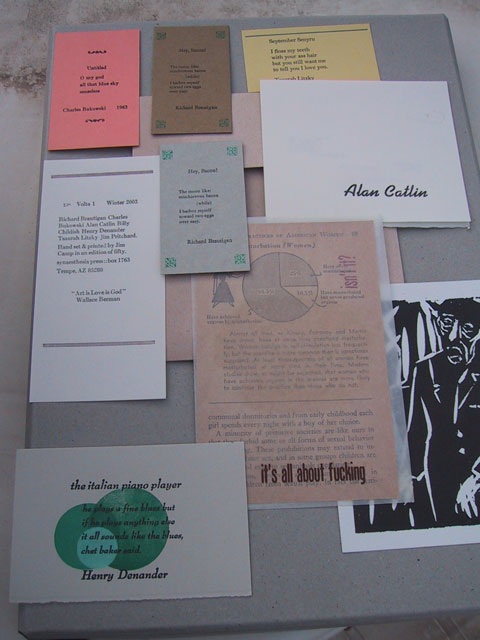
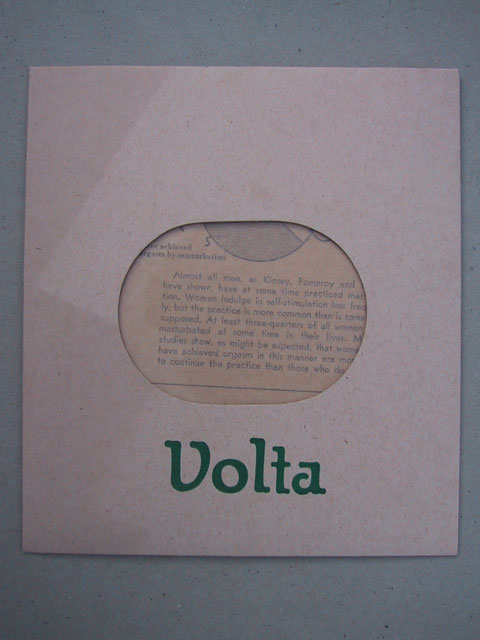
Volta 2, a 2009 synaesthesia press mixed-media portfolio containing poetry, fiction, photography, found imagery, artwork, and printed ephemera housed in an illustrated envelope.

Published 2009 by the synaesthesia press.

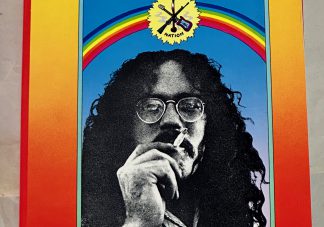
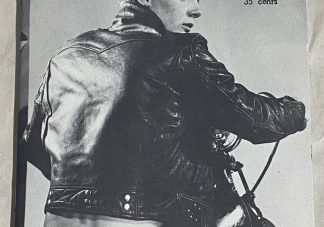
Portfolio. Approximately 6″ × 9″ (15.2 × 22.9 cm). Housed in a black envelope illustrated with a vintage men’s magazine advertisement printed using Print Gocco. Edited, designed, printed, and assembled by Jim Camp and Nathan Feller. Published by the synaesthesia press.

Edition of 100 copies printed at the synaesthesia press in Tempe, Arizona and Los Angeles, California.

In addition to the printed colophon, the contents include the artwork “Welcome! Well, Hello!” by Nathan Feller; the short story “Natural Sines & Cosigns, Tangents & Cotangents (A Love Story)” by Jim Pritchard; the photograph “Herbert Huncke Smoking a Sherm in the Back of a NYC Cab” by Laki Vaz; a found photograph digitally altered by Jim Camp; a found, color transparency selected by Jim Camp; and poems by Henry Tokarski (“Black Spring”), Marie Kazalia (“No Elvis Sightings”), Charles Bukowski (“Untitled”), Richard Brautigan (Widow’s Lament”), and Henry Denander (“Workth”). Most letterpress printed.

The second issue of Volta marked a transitional moment in the history of the press, produced in the middle of its move from its second Arizona period to its Los Angeles period. Conceived as a mixed-media portfolio rather than a traditional literary magazine, the publication brought together contemporary writing, found imagery, photography, visual art, and ephemera in a format heavily indebted to Wallace Berman’s Semina, as well as mail art, and other experimental assemblage publications.

Unlike the later issues of Volta, the first two function as an open container for disparate voices and forms, emphasizing juxtaposition, surprise, and the relationship between text and image.

“Art is Love is God.”

Availability: Out of print.

Posted on Leave a comment

Jim Pritchard | The Neighbors & The Man With the Buzzer in His Throat

Confession time.

Jim Pritchard doesn’t exist.

Or rather, maybe he does and maybe he doesn’t. And his story, The Neighbors, became the very first synaesthesia press chapbook.

As a publisher, I was heavily influenced by the Beat chapbooks of the mimeograph era, and The Neighbors reflected that aesthetic perfectly. The original plan was for the entire press to follow that model: small-format chapbooks, modest editions, and an emphasis on writing over production values. Of course, plans have a way of changing. By the time I published Friends and Enemies and  A Dog & His Boy, the press had already begun moving in a different direction.

Still, looking back, I stand by The Neighbors and Pritchard’s second synaesthesia appearance, The Man With the Buzzer in His Throat. They’re products of their time, certainly, but they remain close to my heart.

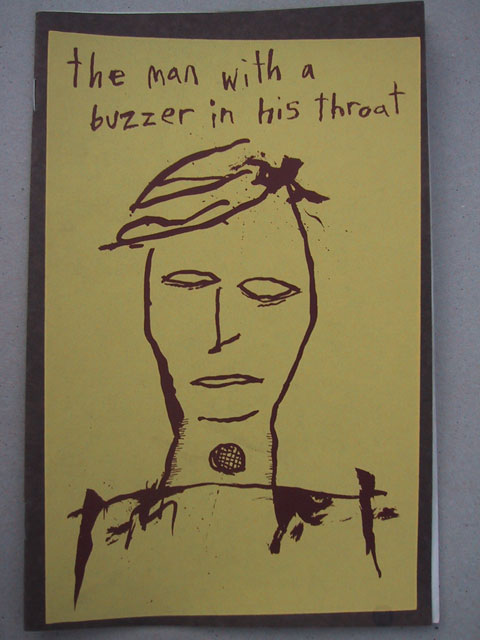
The Man With the Buzzer in His Throat was later published in a little magazine out of Albuqurque called Vox. The cover was silkscreened by the artist Brian Marsland in his backyard in Tempe, Arizona, on a warm spring afternoon. Two variants were produced. One featured only the red image of the unfortunate gentleman with the buzzer in his throat and the story title. Most copies, however, included a yellow background that gave the cover a little extra life.

As for Jim Pritchard himself, his trail eventually went cold.

The last reports placed him in a one-room hotel in San Francisco’s Tenderloin District cohabitating with a sex worker he met at the Mitchell Brothers’ notorious O’Farrell Theater, driving a cab, reading too much, and working on a novel. Shortly thereafter, he disappeared; the sex worker he was associated with was held for questioning and then later released. So, if you happen to know his whereabouts, please let me know. He owes me money.

A lot of money.

Posted on Leave a comment

The Man with a Buzzer in His Throat | Jim Pritchard | synaesthesia press

The Man with a Buzzer in His Throat by Jim Pritchard, a 1995 synaesthesia press chapbook with silkscreen cover art by Brian Marsland.

The Man with a Buzzer in His Throat

Text by Jim Pritchard.

Published in the summer of 1995. Although not identified in the colophon, The Man with a Buzzer in His Throat is the third chapbook issued by the synaesthesia press and among the earliest publications produced by the press during its first Arizona period.

Chapbook. 5 1/2″ × 8 1/2″ (13.9 × 21.6 cm). Stapled wraps with a silkscreen-printed cover illustration by Brian Marsland. Published by the synaesthesia press.

Edition of 103 numbered copies. A small number of copies, believed to be fewer than a dozen, were issued with only a single red silkscreen pass on the cover rather than the completed two-color design.

A collection of short fiction, The Man with a Buzzer in His Throat reflects the press’s earliest efforts to combine contemporary writing with original graphic artwork. The publication predates the formal numbering system later adopted for the synaesthesia press chapbook series.

Availability: Out of print.

Posted on Leave a comment

The Neighbors | Jim Pritchard | synaesthesia press

The Neighbors by Jim Pritchard, the first synaesthesia press chapbook, issued in 1995 as a stapled-wrap excerpt from the unpublished novel Smack.

The Neighbors

Text by Jim Pritchard.

No. 1 in the synaesthesia press chapbook series. Published Spring 1995.

Chapbook. 5 1/2″ × 8 1/2″ (13.9 × 21.6 cm). Stapled wraps. Published by the synaesthesia press.

Edition of 98 copies. All copies were distributed free of charge.

The Neighbors was issued as an excerpt from an unpublished novel tentatively titled Smack. Although intended as the first appearance of a larger work, the novel remained unpublished and the chapbook — along with The Man With The Buzzer in his Throat — stand as the only appearances of this material.

The publication marks the beginning of the synaesthesia press and the first title issued under its imprint. Produced in a modest edition and distributed without charge, it established several characteristics that would continue throughout the press’s history: an interest in contemporary literary writing, small-format editions, and the belief that worthwhile work could find an audience outside traditional publishing channels.

Most copies were destroyed by the author, making surviving examples uncommon.

Availability: Out of print.