Posted on Leave a comment

Ed Ruscha’s Bookworks Shaped My Los Angeles.

A photo of the Edward Ruscha artist's book "Some Los Angeles Apartments" in the second edition.

I left Los Angeles a little over a year ago after spending nearly two decades there. The first few years were an adjustment; after that, I fell in love with the place. Handling an Ed Ruscha title this week reminded me why. Ruscha didn’t just photograph Los Angeles—he caught the rhythms and feelings of the city, the odd angles, the way sunlight can make even a quiet, empty balcony feel like a place.

His bookworks are a big influence. The simplicity, the restraint, the nerve it takes to publish a book “about nothing.” And every time one passes through my hands, I’m right back in my old L.A.: art openings that felt more like neighborhood gatherings, where artists and art nerds and dealers and collectors and people who just liked strange, beautiful things all mixed together without (or with) trying too hard.

Ruscha’s books—especially the L.A.-centric ones—shaped the way I look not only at Los Angeles but how I look at printed matter, photography, and the idea of place in art. Some Los Angeles Apartments, Every Building on the Sunset Strip, and Nine Swimming Pools still hit me the same way: as books that go beyond their supposed simplicity and serve as reminders of a city that rewards anyone willing to slow down, pay attention, and let it seep in.

Posted on Leave a comment

A Conversation in Silver Nitrate (A Play in One Act).

andy warhold and weegee

CHARACTERS:

ARTHUR:
60s. Street photographer. Gruff charm; smokes like he invented it. Shirt shabby and unbuttoned at his belly. Camera bag slung over his shoulder. Moves with the restlessness of a man who has spent decades chasing sirens.

ANDY:
30s. Artist. Pale, stylish, monosyllabic. Hands folded over each other. Pocket on black leather jacket hanging open. Observant but detached and curious.

SETTING:

A cramped New York loft, late 1950s. Torn paper streamers hang from the ceiling. A single bulb casts theatrical shadows. A doorway stands open to darkness beyond.

A folding table holds:
– scattered 8×10 prints scattered under a Bolex 16mm camera
– a portable flash unit and silkscreen squeegee
– an open box of Marlboro cigarettes
– a half-eaten cold turkey sandwich
– a tape recorder that may or may not work

MOOD:

Equal parts crime scene and artist’s studio

OPENING STAGE DIRECTIONS:

Lights rise slowly.

ARTHUR stands near ANDY, looking up at him, cigar hanging from his mouth.

ANDY leans in towards ARTHUR, staring off into space, leather jacket zipped almost to his neck, sunglasses still on despite minimal light in the studio.

A long moment passes before either speaks.

WEEGEE: Y’know, kid, photography’s all about speed. You see it, you shoot it. No thinking. The city doesn’t wait. You agree?

WARHOL: Yes.

WEEGEE: But the art crowd… they think too much. They want explanations. I never cared about explanations. You think a picture needs one?

WARHOL: No.

WEEGEE: Good. Because the truth is, the camera lies as much as it tells the truth. Angle it right, and a nobody looks like a king. Angle it wrong, and a king looks dead. You believe that?

WARHOL: Yes.

WEEGEE: I look at you—glasses, leather, the whole act—and I think, “He knows the performance matters.” You think performance is part of the picture?

WARHOL: (Smiling). Um…Yes.

WEEGEE: But the darkroom, the chemicals, the waiting… it’s a kind of religion. Slow. Patient. You like the slow part?

WARHOL: No.

WEEGEE: Didn’t think so. You’re a machine, right? Machines don’t wait. They repeat. Endless repetition. That’s your whole thing, isn’t it?

WARHOL: Yes.

WEEGEE: Still, kid, whether it’s blood on the sidewalk at three a.m. or soup cans stacked neat on a shelf, a picture’s a picture. People stare because they’re hungry for something real. You think photography can give ’em that?

WARHOL: Um…No.

WEEGEE: (Finally looks away into the same space ANDY has had his eyes locked on). —Heh. Maybe that’s why they keep looking.

END.

Posted on Leave a comment

Five Things, Right Now: Día de los Muertos, The Uncool, Minx, Ken Burns, and Blue Note Tone Poets

A photo of a woman who participated in the annual Tucson Day of the Dead procession November 2025

THING 1: LA DIA DE LOS MUERTOS.

For me, November started on the 9th at Tucson’s Día de los Muertos / All Souls procession — a mile-long walk of drums, candles, flowers, and memory. It’s a community ritual with roots in Mexico’s Day of the Dead traditions, where the living honor those who aren’t here anymore. I asked this woman if I could make her picture; she said yes, and as soon as my shutter clicked, she began to cry. Which made me cry. And together, we quietly wept for a brief moment. Without another word being said. Of course I didn’t know who she was thinking about, but I had my dad on my mind. My Da.

THING 2: THE UNCOOL: A MEMOIR.

SAVE OUR REPUBLIC! JOIN THE JOHN BIRCH SOCIETY! “The Birchers,” my mom rumbled—she was never one to squander an opportunity to teach—“watch out for the John Birch Society” she said. “One day they’ll take over. They’ll disguise themselves as Republicans and put all the teachers in jail.” This is Cameron Crowe, and he’s reading The Uncool, and it’s wild how fast it drops me back into the world that became Almost Famous. I’m eight chapters in, and just like the movie, Crowe’s mom in the memoir runs the house with a kind of fierce, loving, borderline-claustrophobic control. But in the book, she’s full of terrific aphorisms — and also a bit of a soothsayer. She certainly is close with her Birchers prediction; and early on, when she’s teaching in Japan before Crowe’s birth, she gets this overwhelming feeling that something terrible is coming. So strong, she moves out of the apartment she shares with another teacher. A few months later, a tsunami hits — killing a whole bunch of people, including the roomie who stayed in the apartment. And I haven’t even gotten to the part where Crowe meets David Bowie.

THING 3: MINX.

Looking for something to watch? I’m late to this one, but Minx hits a weird, sweet spot for me. It’s on Netflix, and it isn’t the amazingly-written, awards-season kind of show. Sometimes the ideas you care about only get heard when they hitch a ride on the vehicle people are actually paying attention to. Main character Joyce wants to publish a serious feminist magazine; the only way she gets it printed is by wrapping it around a stack of dick pics. Remember the guys who claimed they read Playboy “for the articles”? Funny thing is, the articles were great — and for someone like Joyce Carol Oates, Playboy probably offered the biggest circulation she’d ever get. That’s the grim honesty about building an audience, compromise, and how creativity travels in the real world. And yeah, I kinda feel Joyce’s pain — the one on Minx and the one behind the typewriter.

THING 4: THE AMERICAN REVOLUTION.

Minx doesn’t do it for ya? But you’re looking for something to watch, right? You probably know about the new Ken Burns doc. Maybe you’re already working your way through The American Revolution. If not, you should. I’m doing it, but slowly. And by “slowly,” I mean in 45-minute (or so) chunks—the maximum my brain can handle before it politely taps out. Not because Burns’s new documentary is boring. The opposite. It’s fabulous! It’s like being trapped in a classroom with the greatest history teacher who ever lived, hitting me with beautifully arranged facts until my mental buffer hits FULL. Turns out, that’s actually how the brain works: after about 40–45 minutes of dense information, we drift, not from boredom but from overload. So I watch it the way I’m supposed to eat rich food—small portions, savor everything, breathe between bites. Which means it’s probably going to take me a month to get through it all.

THING 5ive: THE TONE POETS.

I’m not an audiophile — my ear isn’t that good, and I’m certainly not about to start arguing about audio cables or turn tables or JBL vs. Klipsch (I’m a JBL dude) — but the Blue Note Tone Poet reissues are magical. Joe Harley and Kevin Gray are the wizards behind them (I had to look that up), and whatever they’re doing, it works. The fine folks at Blue Note just shipped me A Night at the Village Vanguard; I close my eyes, and for as long as I keep them closed I swear I’m in the Vanguard: small room, clinking glasses, Rollins’ horn right in front of me. I don’t know how they pull it off, but these records sound alive.

Posted on Leave a comment

5 Fall Highlights: Rare Books, Photobooks, and Collectibles from synaesthesia press

A picture of a 1980s Florida Wrestling Amateur Snapshot Album.

Fall doesn’t announce itself so much as tap you on the shoulder — suddenly the day’s way shorter, night’s are way longer, the mornings smell different…and you’re in the mood to rediscover whatever’s been hiding in your own stacks. Maybe that’s just me. Either way, fall is prime time for finding things worth keeping. Or, time to sell! So here are five items I’d buy if I were you: a mix of photobooks, oddball originals, and a few pieces that land squarely in my sweet spot. Call it a fall harvest, call it a seasonal mood shift — these are the things that stuck to me.

Yukichi Watabe — Stakeout Diary 張り込み日記 (First Japanese Edition, Nanarokusha 2014, Photobook)

In 1958, Yukichi Watabe trailed Tokyo detectives as they hunted a grisly murder suspect, capturing trench-coat silhouettes, rain-slick alleys, and the quiet choreography of postwar policing. First serialized in Japanese magazines, the images vanished for decades until Éditions Xavier Barral’s 2011 book revived them and ignited a cult following. Nanarokusha’s 2014 edition, 張り込み日記, brings the work back to Japan in its most complete form: over 140 images sequenced like a visual noir. For collectors of Japanese photobooks, this is a modern classic—equal parts documentary, cinema, and mid-century mood, standing alongside Tomatsu and Moriyama in importance.

1980s Florida Wrestling Snapshot Album

I’ve always had a soft spot for the kind of pro wrestling I grew up on—pre-Vince, pre-pyro, Sunday-morning regional TV wrestling where the crowd was half the show. Which is why this homemade Jacksonville photo album (ca. 1984) hits me right in the heart. Fifty-seven fan-shot color snapshots mounted in a drugstore album, inscribed to Mike Graham for “pinning Kendo Nagasaki,” it’s pure DIY devotion: blood, sweat, blurred motion, and the energy only a Florida crowd could summon. Dusty Rhodes, Graham, Nagasaki—they’re all here, seen from the seats, not the spotlight. A match made in, well… you know.

Bettie Page Bondage Wrestling Photo

Speaking of soft spots: anything that mixes old-school wrestling energy with mid-century underground culture, and this Bettie Page / Irving Klaw 8×10 hits that sweet spot perfectly. Klaw’s staged wrestling scenes were part theater, part taboo—DIY sets, low-budget grit, and the kind of wink-and-a-nod erotica that defined the 1950s underground. And almost landed Klaw in a heap of trouble. And Bettie? She made every frame unforgettable. While Klaw’s 4×5 contact prints are common, these larger 8×10 enlargements—especially from the 1980s revival—carry a different weight. Bettie locked in a staged struggle, fearless and playful, is a cornerstone image for any pin-up or Klaw collector.

One Big Self: Prisoners of Louisiana (and other terrific photo books from Twelvetrees & Twin Palms!)

Every so often I get a little run of Twin Palms / Twelvetrees books in the shop, and it reminds me why Jack Woody’s publicationsare so amazing. One Big Self is one of the greats—Deborah Luster’s tintype-style portraits of Louisiana prisoners paired with C.D. Wright’s text to create a documentary project that’s as somber as it is humane. Shot large-format, sequenced with care, and printed in that unmistakable Twin Palms way, it has real weight—physically and emotionally. For collectors of contemporary documentary work, this is one of the essential titles from the early 2000s and a standout among recent arrivals that include an ultra-limited Winogrand title, Ginsberg’s amazing PHOTOGRAPHS, Jack Pierson and George Platt Lynes.

IMPERIAL: PHOTOGRAPHS • William T. Vollmann

About twenty-five years ago, when I had a small presence at Tall Stories in the Mission, I’d wander across the hall to the fine folks at Bolerium. It was there I first saw a book inscribed by Anne Rice to Bram Stoker. Wait…what? HUH? Authors inscribing books to their favorite dead writer? Authors inscribing books to their favorite dead poet? Authors inscribing books to their favorite dead musician? Now this is an idea to steal!! So when William T. Vollmann signed this copy of Imperial: Photographs, I asked him to dedicate it to his favorite dead photographer. Cause…Bolerium!

Posted on Leave a comment

My Pilgrimage to Canton

A picture of the water tower in Canton, Texas

I finally made it to Canton, Texas—the hyped as the “world’s biggest flea market”—because that’s the kind of flea-market nerd I am. I travel to them: Paris, Alameda, Amsterdam, Phoenix, Rome, New Orleans, Tucson, and all my Southern California stomps. And no, I didn’t fly to Europe just for the fleas, but it made my decision to go there easier.

Canton’s been on my radar for years. It’s about an hour east of Dallas on the way to Shreveport. Typical small-town Texas: a fun courthouse square littered with historical plaques; a terrific, old cemetery; a terrific WPA-constructed art-deco town hall, and a small restaurant where I half-heartedly flirted with my waitress over mediocre Italian food. I crashed at a funky Airbnb on the square called The Dragon Fly Inn—clean, comfy, and loaded with yummy snacky-snacks. There’s good coffee next door, and The Dragon Fly is walking distance to one of Canton’s many main entrances. With my big, floppy hat and sun glasses, backpack with water bottle firmly attached, and freshly sprayed head-to-toe with SPF-45, I made my way in.

I was excited. I shot my brother a quick selfie and said something silly like, “today’s the day I find a first edition Book of Mormon in an old pile of discarded paper!” He replied looks more like you’re ready to score some Largemouth Bass. And that, my friend, concludes the best part of my little tale.

Turns out The World’s Biggest Flea is the world’s biggest let-down. Unless you’re shopping for brand-new garbage—holiday ornaments, marble sinks, Soccer Mom Arts n’ Crafts, wooden signs with not-really-witty-and-not-so-funny sayings whittled into them; all sorts of Trump merch, Confederate flags (in other words more Trump merch), guns and handguns and bullets and big knives for stabbin’-n’-maimin’ folks; and even bigger corn dogs slathered in mustard and funnel cakes dripping with grease and powdered sugar. Fried pickles. Fried Oreos. Fried okra. Fried green tomatoes. Assorted other Fried Meats on a Stick. And lots of Rascal Scooters.

Most anything on a vintage table was junk…and overpriced. I did manage to pull a few cheesecake mags, a Beatnik glossary, a Choctaw / English dictionary, and some black-and-white snapshots that, all-in-all, were just OK. Over the course of two hot, humid days that made my hips ache more than my knees.

My best score? On the way out after day two, I found a crisp fifty dollar bill just laying there on the ground for anyone to take. It’s the most money I’ve ever stumbled upon in my life.

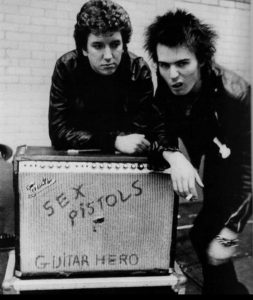
Still, trips like this remind me of what Johnny Rotten said in San Francisco as the Sex Pistols finished up the last show of their American tour (it was also the last show of their career) — Ever get the feeling you’ve been cheated?

Posted on 1 Comment

Five Things, Right Now: Ace, Richard Prince, Stephen Shore, & a couple more.

Thing 1: RIP Ace.

My earliest record-buying memory goes back to the fall of 1975 and a Phoenix grocery store chain called “Smitty’s Big Town”. Long before Costco, Smitty’s figured out that people might want to buy their groceries, a tennis racket, a toaster, and a bike all in one place; hence, it’s a Big Town. For Sixth Grade Me, that meant one very important thing: Big Town’s small — but magical — record section tucked between the last of the food aisles and the sporting goods. I first saw KISS Alive! rifling through their tiny ROCK section, but I already heard about the record. And certainly the band. The rumors were already circulating at my middle-school (and probably yours, too): were they Satanists? Knights in Service of Satan! Did they even actually play their instruments? And certainly Gene Simmons had a cow’s tongue sewn onto his own. I asked my mom for the album, but she scoffed — maybe because double albums cost more, maybe because she just didn’t want that noise in her house. Her official reply: “You don’t like acid rock, so go put it back and meet me up at the cashier’s.” I said: “OK.”

(Photo credit: Chalkie Davis).

Thing 2: Richard Prince  Early Photography 1977–1987.

I caught Prince’s Gagosian show built around this book last spring in New York. What I love about Prince—pictures or paintings—is how approachable the work feels, which, I know, sounds ridiculous when you consider that thing called appropriation. But that’s the point for me, same as with Warhol and Duchamp: it’s less about how “easy” the work seems (I can do that!) and more about the reaction it provokes. I love watching people grow furious. That energy becomes part of the piece. And being at the gallery and standing in front of these prints really tightened it all up—Prince’s deadpan humor, the re-framing, the way an image shifts when you simply say it’s art. Because it is art, and no…you couldn’t do it.

Thing 3: Scot Southern.

I’m pretty sure I met Scot Sothern’s Work and Scot Sothern The Man at the same time—at his These Days show a handful of years ago—and I’ve been a fan ever since. I love his writing as much as his photography as much as his art. His voice, the imagery, our shared idea of the human condition— it hits me the same way a terrific Bukowski poem or one of Vollmann’s Tenderloin stories or some of Mikailov’s toughest photographs. In fact, I like Scot’s work so much the synaesthesia press will be publishing one of Scot’s short stories in the not-too-distant future.

Thing 4: Sofiya Loriashvili куряче крило.

куряче крило means “chicken wing”, and the fine folks at Paper Work just published Sofiya Loriashvili’s book in an edition of 100. I didn’t know her work; I did know Boris Mikhailov’s Case History—and the second I saw Paper Work’s advert for Chicken Wing I flashed back to the remaindered art book store near the Pompidou in Paris well over a decade ago. (It’s since closed.) It’s where I pulled a copy of Case History for 10Euros, and it’s been rattling around in my head ever since. Loriashvili isn’t doing Mikhailov, exactly, but his influence is there: the toughness and tenderness of looking straight at a place and its people without flinching, and then letting a small, ordinary moment do the heavy work. Which is a fancy way of saying the photog is limiting their audience. Which is a fancy way of saying Chicken Wing ain’t for everyone—bleeding heads and shootin’ dope and panties bled through—or, in other words, young Ukrainians barely holding their own in their (our) fucked-up world. I’m in for two copies.

Thing 5: Stephen Shore — Early Work.

If I could trade creative lives with anyone, I think it’d be Stephen Shore. I’ll digress: as a kid I watched my mom work her Canon AE-1; as an adult I found my grandpa’s color slides from the late ’40s/early ’50s. So yeah, I’ve always wanted to be a photographer—maybe it was even in my DNA? But I never wanted to be “that guy.” You know. The one with the camera flung around his neck asking people to hold still. Call it imposter syndrome, call it low artistic self-esteem. Call it not wanting to be perceived as creepy. I picked up a camera now and then during the 90’s (mostly then), but I never pushed it. Shore did what I couldn’t; and then, as a young man in the mid-60’s, he walked straight into the peak of Warhol’s Factory. With a camera flung around his neck being that guy. I’d almost sell my soul for that. (Maybe not.) What I love about Early Work is how assured his young eye already is—the quiet strangeness of ordinary life most people miss. It coincides nicely with Prince’s Early Photography: two photogs figuring out what pictures can do—one by re-defining images that already exist, the other by noticing the world most of us miss.

Posted on Leave a comment

Five Things, Right Now.

Thing 1: Pig by Sam Sax

On a not-so-recent run to Tucson—my favorite Arizona city—I ducked into another favorite, Antigone. There on the shelf, face out for maximum marketing, was Pig by Sam Sax. Gotta love when they face-out a book of poems! And yeah, I know: only suckers judge books by their covers. But whoever designed Sax’s cover deserves a gold medal pinned to their chest. It made me grab it. Heads up: these poems aren’t for everyone. Take Pig Bttm Looking for Now—raw, unflinching, and exactly the kind of poem that makes me lean in instead of looking away. I grabbed Pig for its cover, but Sax’s poems made me buy it.

Thing 2: Erik Satie

While scouring my usual places for interesting pictures to post on Instagram, I stumbled on a Man Ray portrait. The subject? Someone I didn’t know: Erik Satie. Turns out he was a French composer—and a full-on oddball in the best way, which is right up my alley. Satie wandered Paris in velvet suits, carried a small hammer just in case (no one ever pinned down what, exactly, “just in case” meant), and kept seven identical grey suits so he could always look like a “priest of boredom.” He collected umbrellas, ate only white foods (eggs, sugar, grated bones, animal fat, veal, salt, coconuts, rice, turnips, pastry dough, and certain cheeses), and scribbled musical directions like to be played like a nightingale with a toothache. And yup, Satie’s streaming everywhere. Even Bandcamp. Right now. On my player.

Thing 3: Flagstaff, Arizona

I’ve talked about Flagstaff before. It sits at 7,000 feet in northern Arizona, tucked into ponderosa pine forests at the base of the San Francisco Peaks. Once a railroad and lumber town, today it’s a mix of college energy, mountain-town super funk, and gateway-to-the-parks tourism. With four seasons—snow in winter, wildflowers in summer—it feels like a different world from the desert where I dwell just two hours south. Back in March I spent 48 hours here. Well—I’m back again now, winding down my week-long road trip. Not many bookshops to duck into; I drink my coffee at Macy’s; and I take my doggo Molly for a walk in Wheeler Park. I could never spend the rest of my life here, and certainly no more than a few days during the winter. But the summer? Just point me toward a cabin within walking distance of my coffee spot and Molly’s park, and I’ll sign the 6-month lease.

Thing 4: Gay Nazis

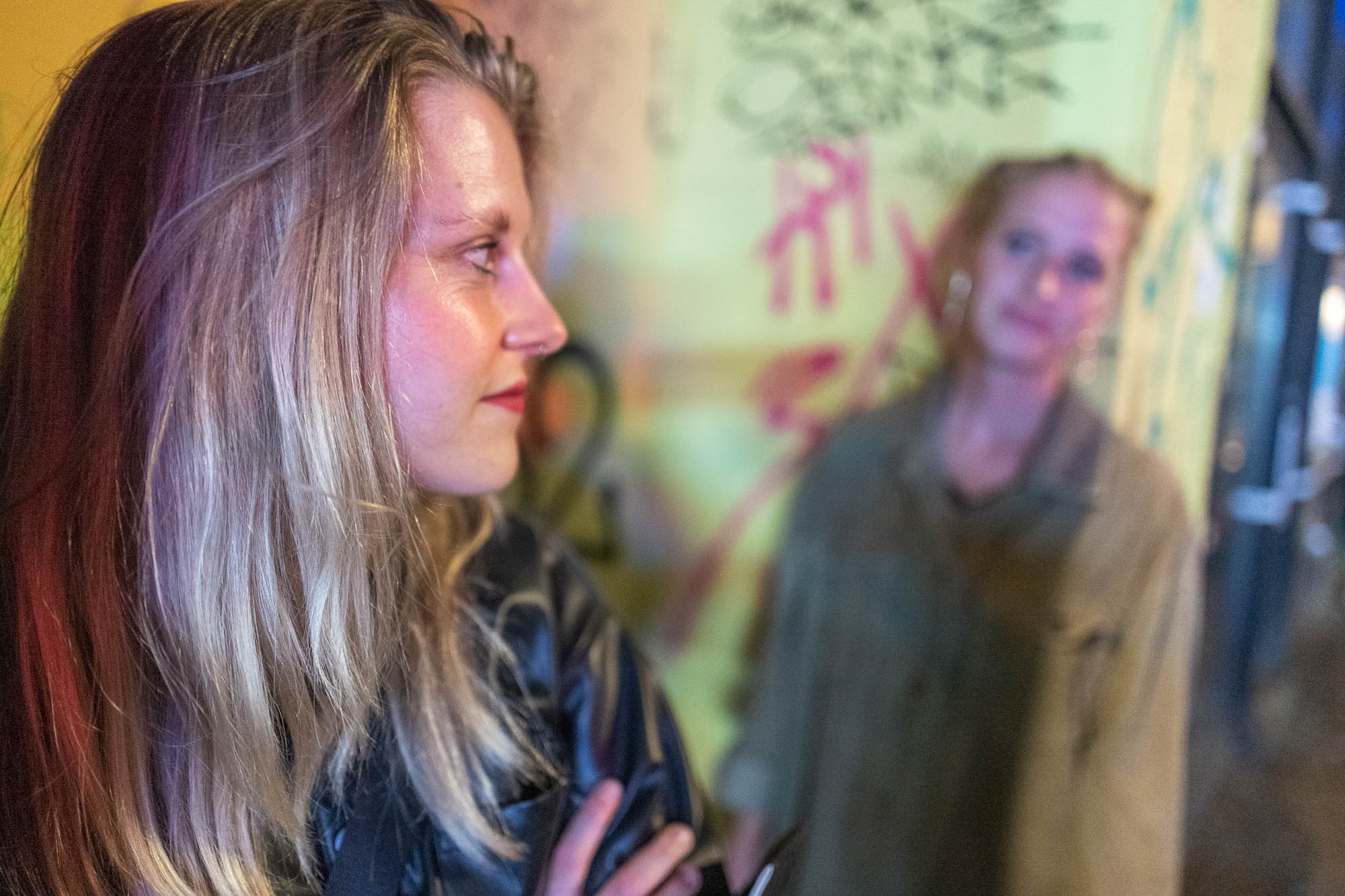
Go ahead and think I’m crazy, but yeah—a friend and I brought up Gay Nazis in a conversation today. Specifically, the Brownshirts (SA), Hitler’s original street thugs in the ’20s and ’30s. They wore brown uniforms, roughed up opponents, and helped pave Hitler’s rise to power. Their leader, Ernst Röhm, was openly gay—unusual in Nazi ranks. Plenty of the SA followed suit. For a while Hitler and Röhm were very close. Röhm was useful. And when he wasn’t, you probably know the end of that story. So when a reporter asked The President how he was holding up after Charlie Kirk’s death—and the flippant answer “I think very good” before pivoting to brag about a new White House ballroom? No, the President didn’t have Charlie killed. But of course that’s an absurd response concerning someone who most likely got him to the place he is right now. Which somehow feels like it came straight out of history’s darker chapters. Just like a lot of other things happening right now. So yeah. Gay Nazis.

Thing 5: Pro Wrestling as Modern Folk Theater

The night before I left on this road trip, I shot the 7th anniversary show for Phoenix Championship Wrestling. Sure, we all know people love to mock wrestling as fake and stupid and just guys in tights pretending. But what they miss is the higher thing: pro wrestling as modern folk theater. Oh sure, you’re laughing. But hear me out—it’s a morality play in spandex, storytelling to scream back at (or laugh at), complete with heroes, villains, betrayal, and redemption—all unfolding in a ring that doubles as a stage. Like commedia dell’arte or old morality plays, the characters are archetypes: the cheating heel, the babyface who won’t quit, the crowd deciding in real time who deserves the win. It’s not about suspension of disbelief—it’s about collective belief. And there’s nothing like watching it in person. Of course everyone knows it’s scripted, but for a couple of hours, why not agree to play along? In that shared performance, wrestling feels as old as theater itself.

Leave it to a wrestling-nerd-cum-intellectual-book-nerd to critically think about wrasslin’.

Posted on Leave a comment

Five Things, Right Now.

I’ll kick off this installment with this quote from The Monkey Wrench Gang: “Seldom Seen Smith was in the river-running business. The back-country business. He was a professional guide, wilderness outfitter, boatman and packer. His capital equipment consisted basically of such items as rubber boats, kayaks, life jackets, mountain tents, outboard motors, pack saddles, topographic maps, waterproof duffel bags, signal mirrors, climbing ropes, snakebite kits, 150-proof rum, fly rods and sleeping bags. And a pickup and a 2½-ton truck, each with this legend on magnetic decals affixed to the doors: BACK OF BEYOND EXPEDITIONS, Jos. Smith, Prop., Hite, Utah.”
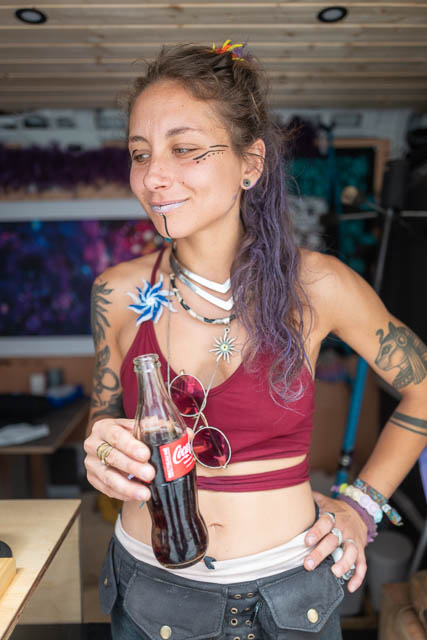
1. Back of Beyond Books, Moab UT.

You don’t know this, but I’m on 7-day road trip, driving “The Mighty Five“. So yea…this week’s installment will be all about that. Road tripin’ The Mighty Five. While in Moab, I stumbled across Back of Beyond, and it’s terrific. The new book selection is strong, but the real draw? If you’re an Ed Abbey geek, here ya go: their “Ed Abbey case,” holds pretty much every one of his titles in first edition—many signed or inscribed. Jonathan Troy? Check. The Brave Cowboy? Check. Shit, I’ve never held a first of Brave Cowboy, and I’ve only seen Jonathon Troy one other time. Plus all his later works still in print, including the Crumb-illustrated Monkey Wrench Gang and the University of Arizona Press edition of Desert Solitaire. Head to the back of the store and you’ll find a great section of rare books. A complete run of Jon Webb’s Outsider magazine, four of the five issues in jacket, and by far the nicest copy I’ve ever seen of Gypsy Lou’s Flowers Picked at Geronimo’s Grave, which, I’m certain, is still under her spell. And if that’s not enough, check out Ed Abbey’s writing desk on display—complete with a faux Abbey manuscript, like he just stepped out to make a quick run for a cold bottle of Schlitz.

2. Torrey, Utah

Torrey, Utah, was settled in the 1880s by Mormon pioneers. Today it’s best known as the gateway town to Capitol Reef National Park, and most of the town’s population are descended from said Mormon pioneers. So, after a terrific breakfast at the Wild Rabbit Café, we drove around their tiny town. Torrey’s population is maybe 120 (hear hear, Jim Thompson!), so you don’t expect much beyond the terrific, old schoolhouse, now a bed & breakfast. But in that parking lot I spotted a brand-new car up on concrete blocks, all four tires gone. I laughed and asked the couple standing nearby the other parked cars if the tires had been stolen—”because that’s the kind of thing that only happens in Big Bad Blue Cities, not here in Safe-and-Red Small Town, USA.” The woman glared at me and walked away. Yup. It’s their car. Yup, I felt like a giant ass. I apologized profusely to the man, who was good-natured enough about it. He told me the only dealership that could help was in Salt Lake, some 200 miles away. Seven to ten business days for new tires to get delivered to Torrey. My guess? The missing set didn’t make it far out of Torrey. Maybe someone over at that giant polygamist compound right down the street might know a little sumptin’-sumtin?

3. UT-12: Escalante to Boulder

The stretch of Highway 12 from Escalante to Boulder beats Highway 1 from Pacifica to Henry Miller’s cabin—at least when it comes to The Most Harrowing Highway Drives in America. It culminates in what’s called “The Hog’s Back”, a narrow ridge with serious, stomach-turning drop-offs on both sides—the kind that made my palms sweat as I maintained my focus on the solid yellow line. I’m talking like 1,000 foot drops. Did I mention on both sides? Or there’s no guardrails? Stomach-tingling vertigo. Your car on a tightrope. Rolling into the tiny town of Boulder, relief comes at what appears to be a Sinclair gas station. It’s really Hills & Hollow Mini Mart, so go ahead and grab that jar of locally canned pickled beets and a can of fancy oat-milk cold brew to go with that loaf of still-warm, locally-baked bread. Did your analogue camera run out of film? Yup.

Thing 4: The Monkey Wrench Gang
The Monkey Wrench Gang has been on my To-Read list for a long, long time. I dunno why I haven’t gotten around to it until now. I have a faint childhood memory of my mom going to an Ed Abbey reading (maybe ’78?). Also during that time, I’d ride dirt bikes on what was then the edge of suburban Phoenix and I’d see new-home billboards either smashed, burned to the ground or tagged into oblivion, always with SODSave Our Desert — sprayed across them in black paint. SOD has stuck ever since. So on my way out of Moab, I grabbed a copy: the paperback “exclusive 50th Anniversary edition from Back of Beyond Books”, along with the new, 2025 clothbound Dream Garden Press edition illustrated by R. Crumb. One I’ve already started to read, the other will sit on my shelf back home and barely molested.

Thing 5: Carl’s Critter Garden
In Hanksville, Utah (population just over 100 depending on the time of year), I stumbled across a folk-art, sculpture garden masterpiece called Carl’s Critter Garden. You can find more online, but I got the real story straight from Dave, who’s been The Critter Garden Guardian for about eight years now. The place is equal parts surreal and twisted, rusted-out metal, not far from the canyons where Butch Cassidy and the Sundance Kid once hid out. My favorite piece? The resident giant space alien who greets you with an important announcement for “the People of Planet Earth”. The message is Everything Empathy—something that feels needed more now than it has in a long, long time.

Posted on Leave a comment

Five Things, Right Now.

This is a picture of the Vandercook SP15

Hey hey oh hai everyone! I’ll kick off this batch of Five Things, Right Now with a line from T.S. Eliot: “If you’re not in over your head, how do you know how tall you are?” Which is just my fancy-pants, literary way of saying I have no idea when I’ll actually have five new, fun things to talk about. And probably not every Friday.

1. The Vandercook SP-15 Proof Press

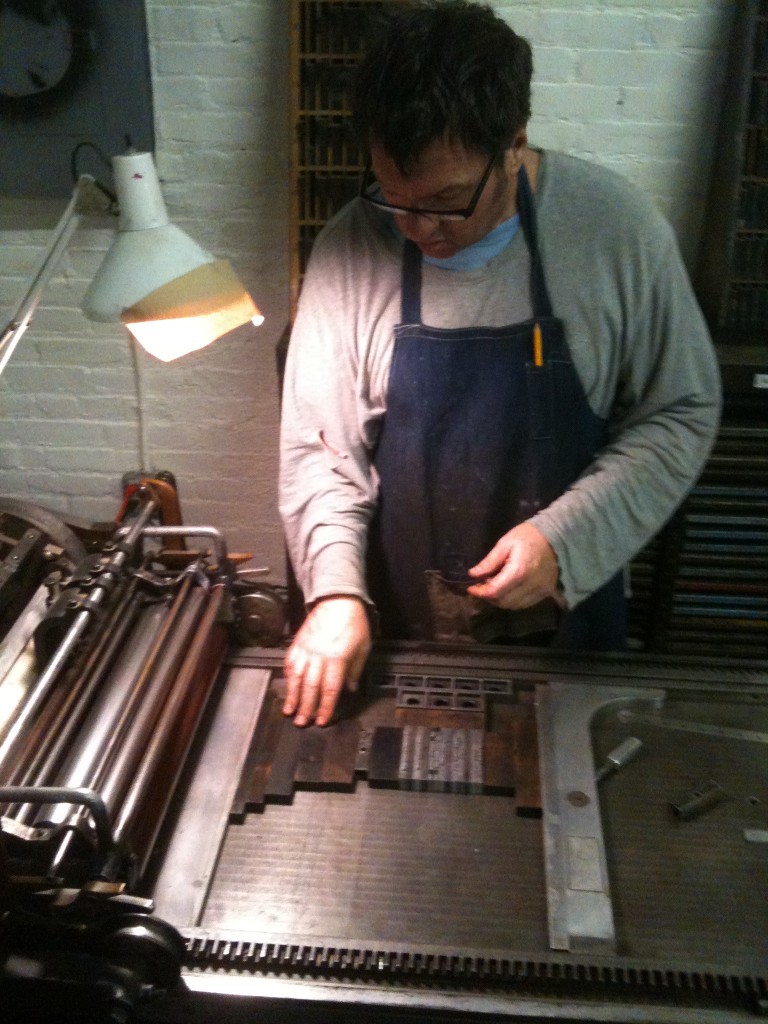
Meet the new engine of the synaesthesia press! After years working on my Vandercook OS 219, I’ve made the move to the legendary SP-15 — a proof press compact enough to actually fit into my new garage-studio; but, like all “Vandys”, it’s built like a tank. Vandercook introduced the SP (“Simple Precision”) line in the 1960s, and the SP-15 quickly became one of the most popular presses they ever made. Printers love it because it strikes the perfect balance: a generous 14¾” × 20″ form area, precision engineering, and user-friendly controls. This press feels like the right size for where I am now — still capable of my artist’s books, broadsides, and oddball ephemera I love to make, but no longer overwhelming the space…and about 2000 pounds lighter than my OS 219. Give or take.  In short: it’s the perfect new anchor for the synaesthesia press. Expect to see new work rolling off this cylinder soon. I might even take a few jobs! Got a broadside idea you’d like me to print?
2. Tina Brooks – True Blue

Of course you know John Coletrane. You probably know Sonny Rollins. Maybe Cannonball? How about Tina Brooks? For me, he’s a haunting figure in jazz — a tenor saxophonist who had the sound, the ideas, the compositional talent, but never an audience. Which is one of the reasons I love him so. In 1960 he recorded True Blue for Blue Note, the only album released under his own name while he was alive. I’ve been streaming it for a couple years now. It’s a remarkable session: lyrical, inventive, full of personality, and yet it sank almost without a ripple at the time. Did I mention Brooks never found the audience he deserved? Or that I love The Creative Underdog?  Brooks’s life was cut painfully short. He struggled with heroin addiction, recorded sporadically, and by 1974, at age 42, he passed. Most of his music remained in the vaults until decades later, when (first) the Japanese collectors and (second) the reissue folks figured him out. True Blue is the work of an artist whose brilliance is evident, but who lived and died largely unseen.

3. Gorilla Biscuits at The Van Buren 6 Sept. ’25

They opened for The Circle Jerks. But I was there to see Gorilla Biscuits. Back in their first run (1991-ish?), I’ll be the first to admit I poo-poo’ed them. I poo-poo’ed the whole “straight edge” thing. It felt almost like an oxymoron to me, and I never gave any of those bands a chance. But I have no problem admitting when I’m wrong. Decades later? These guys shred. Their energy was off the charts, the songs tight and fast, and what’s better than people watching at a punk show? It’s a reminder that some music ages better than our own prejudices. And hasn’t punk aged well?! That’s probably one of the five things I should be writing about today.

4. It All Dies Anyway: L.A., Jabberjaw, and the End of an Era

On a recent trip to Half-Priced Books, I came across It All Dies Anyway: L.A., Jabberjaw, and the End of an Era. Essentially, it’s a love letter to a tiny, all-ages coffeehouse; but it’s known better as an underground music venue in L.A.’s “Mid-City” on Pico Boulevard. I wasn’t living in L.A. during its run, but I knew about Jabberjaw through Coop’s amazing, unforgettable show posters that made it into my local record store in Tempe, AZ, during the mid-90’s (and now go for a tidy sum). I love this book. And even though I never set foot inside Jabberjaw, this book makes me feel like I didn’t miss much… other than all the incredible bands that played there.

5. Jack Woody.

I’ve never met Jack Woody, but I feel like I know him in the same way I “know” Jabberjaw—through what was created. Woody founded Twelvetrees Press in the early ’80s as a nonprofit, so he could secure NEA money—back when that was still possible—and used it to publish the beginning of what would be daring, beautifully-made photo books. A few years later he launched Twin Palms as a for-profit house, and for a brief stretch between 1989 and 1992 the two overlapped. Everything Woody publishes amazes me: thick papers, deep inks, design so sharp it forces you to slow down as you turn each page. The list of photogs he’s published is staggering—from Mapplethorpe to Winogrand to Ginsberg to Herb Ritts to Eggleston and Disfarmer—and the books feel almost like Christmas Morning. Or Easter Brunch. Or a Diwali Festival. You get the idea.

I’ll end this with a humble flex: the Twin Palms summer sale just wrapped, and I managed to land a lettered copy of William Eggleston: For Now. There were a few signed copies still available(!) (which is what I ordered), but a lettered copy ended up in my library! I want to believe — somehow and some way — that Jack sent it to me himself. ‘Cause he feels my love for everything he makes…all the way from Arizona.

Posted on Leave a comment

Five Things, Right Now.

A picture of the R. Crumb zine "The Kinds of Girls I Like!"

1. A Major Flex (Sorry, Not Sorry!)
I’m going to kick off this week’s 5 Things Right Now with a flex. A major flex. Thing is, no one likes a braggart…but that’s what I’m about to do. Because a few weeks ago, I sent a handful of 4 Minute Mile to people I consider heroes, and one of them was R. Crumb. Yesterday, I opened my mailbox to find The Kinda Girl I Like!—marked “one of two copies.” Inside, a long handwritten letter where he riffs (in classic Crumb fashion) on the women in my zine, his own preferences, and even a memory about our mutual friend, the photographer Eric Kroll. Crumb really has been a hero to me, and to receive anything directly from him—sparked by something I made—is about as surreal as it gets. Seriously, I ain’t braggin’; it’s about sharing a rare moment where the creative energy you throw into the world actually bounces back in the most unexpected, humbling…and inspiring way. Which I really needed, cause I’ve sold like 6 copies of Four Minute Mile, almost all to friends.

2. Stanley Turrentine & The Three Sounds’ Blue Hour.
This week, I’ve had Blue Hour on replay. Re-stream? Whether I’m reading, working, or about to fall asleep. If someone could create the perfect soundtrack to the Beat Generation, this is it. Ever hear something and wonder, why did it take me so long to discover this?! Turrentine and his three sounds — pianist Gene Harris, bassist Andrew Simpkins, and drummer Bill Dowdy — in a beautifully subdued session. If you’re a Blue Note nerd like me, it’s BLP 4057. It’s been reissued in their Classic Vinyl Series, remastered from the original tapes and pressed into that thick, glorious 180g vinyl—it’s sonic heaven for late-night spinning, Daddy-O. Or late night streaming. It’s so good, I’m ordering the record. Cause I’m buying records again. Albums. LP’s. EP’s. 45’s. Just whatever you do, please don’t call them “vinyls”.

3. Alien Earth (Hulu)
I’ve really been digging into Alien Earth. It’s basically the Alien franchise stirred up with some brand-new, gross, squirm-inducing-and-awesome little critters (the Octopus Eyeball is my current favorite—equal parts ridiculous and terrifying). The story is Philip K. Dick crash-landing into an H.R. Giger nightmare. Which isn’t that far off, cause there’s a terrific crash landing that kicked this season off. And there’s Sydney Chandler, too. She’s just terrific, carrying so much of the show’s strange humanity while dodging (and sometimes embracing) its nightmare. How about a little more Sydney from here on out? I don’t care if she’s a nepo baby; truth is, without Marcy / Wendy, I’m not sure I’d still be watching.

4. Wet Leg at the Tiny Desk
Everyone should know NPR’s Tiny Desk series by now — it’s practically a rite of passage for any band with buzz. What you might have missed is Wet Leg’s recent performance promoting their new record, Moisturizer. I’ve loved Wet Leg since first hearing the greatest song ever written about a chaise longue: they’ve got guitars, hooks, and a perfect mix of cheeky and dead-serious. But I’ve always been a sucker for fem-powered pop melodies built on loud guitars. Watching them cram their energy into a cozy NPR office just makes it better — that spirit in long hair and beards and a Holden-Caulfied hat, shoulder pads built for hockey players, a red phone and library chairs.

5. Steve Diet Goedde’s Little Edition Print Subscriptions
Every month a small brown envelope lands in my PO Box with a little magic inside. This month it’s Print SDG062—a superb image of burlesque model Lucy Fur. Goedde’s thing is elegant, low-key fetish in luminous black-and-white; he shoots only with available light, and the tonality is why these tiny prints feel so big. If you don’t know the subscription, it’s the best 10 bucks you’ll spend—all mailed in his brown craft envelopes I’ve come to look forward to. It’s intimate, affordable, and old-school in the very best way.  If you don’t know Mr. Diet Goedde: a long-time LA fine-art erotic photographer (Beauty of Fetish, Extempore), with a style that reads as much fashion as fetish—precise, composed, and human. If you’re curious, his shop and books are an easy rabbit hole.

Camera note for the nerds: he regularly mentions the Mamiya 645 and T-Max 400 in posts/interviews — the recipe for his (now) not-so-secret sauce.