Barry Gifford has become a special friend of the press.
Initially, he was kind enough to support Steve Fisher’s book with a back cover blurb.
Mr. Gifford’s first chap book with the press, The Strangest One of All, is a short narrative about a visit he took to the Bunker — a one-time residence for William S. Burroughs.
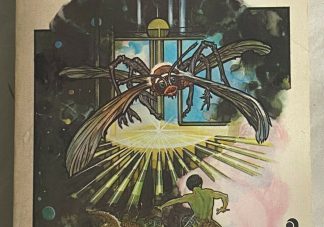
Barry went with his son and an ex-baseball player named Jimbo Carothers. There they met Burroughs, and they talked about things like poisonous darts and deadly spiders.
The total edition for The Strangest One of All was 176 copies. Illustrations by Billy Childish. Book design by Johnny Brewton. 150 were numbered, the first 50 signed by Barry, with 26 lettered copies that were placed in a manila envelope and containing three woodcuts Billy Childish created for the book. Both Barry and Billy signed the lettered edition, too.
It was the first separate edition of a piece that appeared in SPEAK Magazine in Fall, 1997.
More recently, the synaesthesia press collaborated with Gifford and Don Ellis of Creative Arts Book Company to produce The Lost Christmas & Other Stories: A Holiday Trilogy. 99 copies were printed, none of which were sold. Instead, we sent them out in December ’01 to the friends of the author, the synaesthesia press, and Mr Ellis, as a holiday greeting.
I also printed and published Elegies in 2004. Elegies is a set of two individual poetry broadsides written by Barry as elegies to Jack Kerouac and Gregory Corso: “On Viewing The Manuscript Scroll of Jack Kerouac’s On The Road in the Tosca Bar, San Francisco” and “Small Elegy For Corso”.
I printed the poems on card stock and housed them in a three panel folder with a die-cut cover that featured a linoleum block design that was heavily influenced by the Dada artists I admire. Barry signed the whole edition at his mom’s kitchen table as I handed them to him, and we talked about things like the novel he was working on, movies we admire, and Barry Bonds.
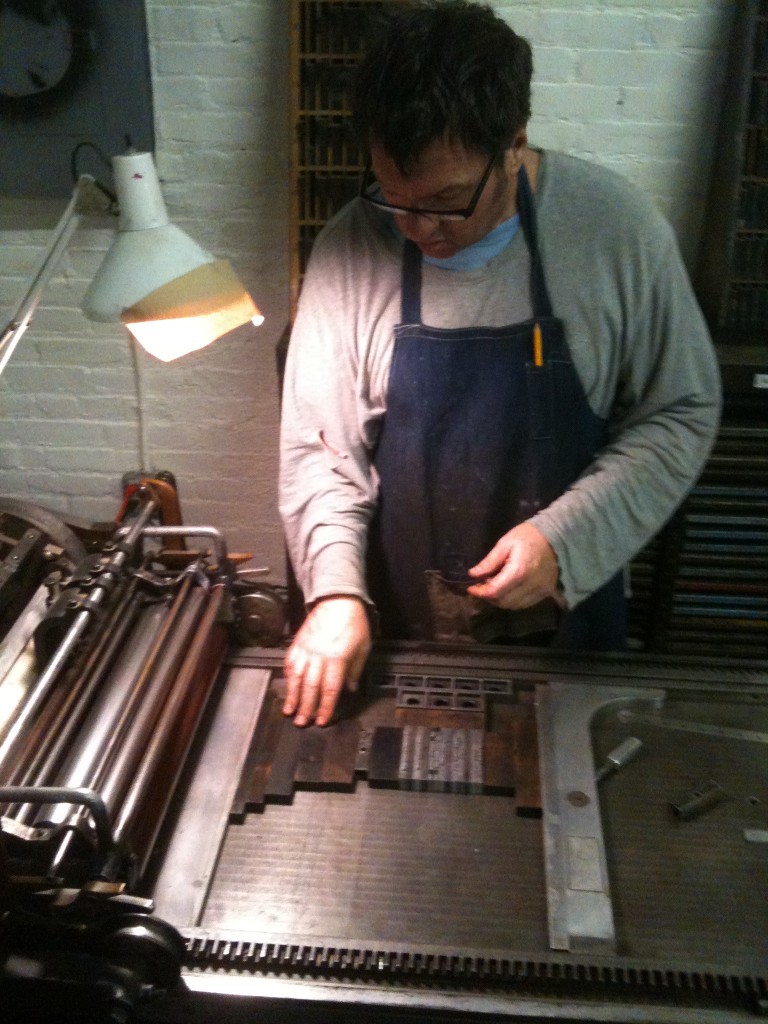
200 copies of Elegies were printed. Design and text are both digitally set and printed by hand, then letterpress printed on an old Vandercook press — a #219 Old Style, to be exact, which is the backbone of synaesthesia.
With the generous help of Barry Gifford, the synaesthesia press has become a much better thing, for lack of a better term.