The synaesthesia press has listings in a few directories soliciting a poem for chapbook consideration. While I’m not big on this sort of thing, who knows if the next Charles Bukowski is sitting in a cheap room pounding out poems and looking for a place to send them? So I keep the listings current, just in case. And, just like everyone who publishes anything, I get more than I could ever print. To top it off, a lot of the work sent in just doesn’t do anything for me.
Enter Henry Tokarski. From the very first poem I read in his submission, I was hooked. I decided to publish the work before I got to the last poem in the batch.
We look to label everything we experience, from music to people, and while I’m not a big fan of this, I do it, too. So when people heard me talking about Henry’s work and asking me, “what’s it like?” my standard reply is Brautiganesque.
When the project started coming together, I asked Gerald Locklin to write an introduction to the book. Here’s part of what he had to say: Henry Tokarski has produced a sequence of youthful, credible love poems in a time not hospitable to such efforts. His method crystallizes lyric moments, probing and preserving them, and, unlike Proust, always in the fewest words possible, as with all minimalist art, spaces and silences are left for the participation of the reader, the merging of his emotional history with that of the writer. All in all, the pieces add up to a serious, tasteful, and psychologically sophisticated chronicling of a romantic passage, singular in tone and auguring a future of well chosen words.
There’s no way I could have described Henry’s work better.
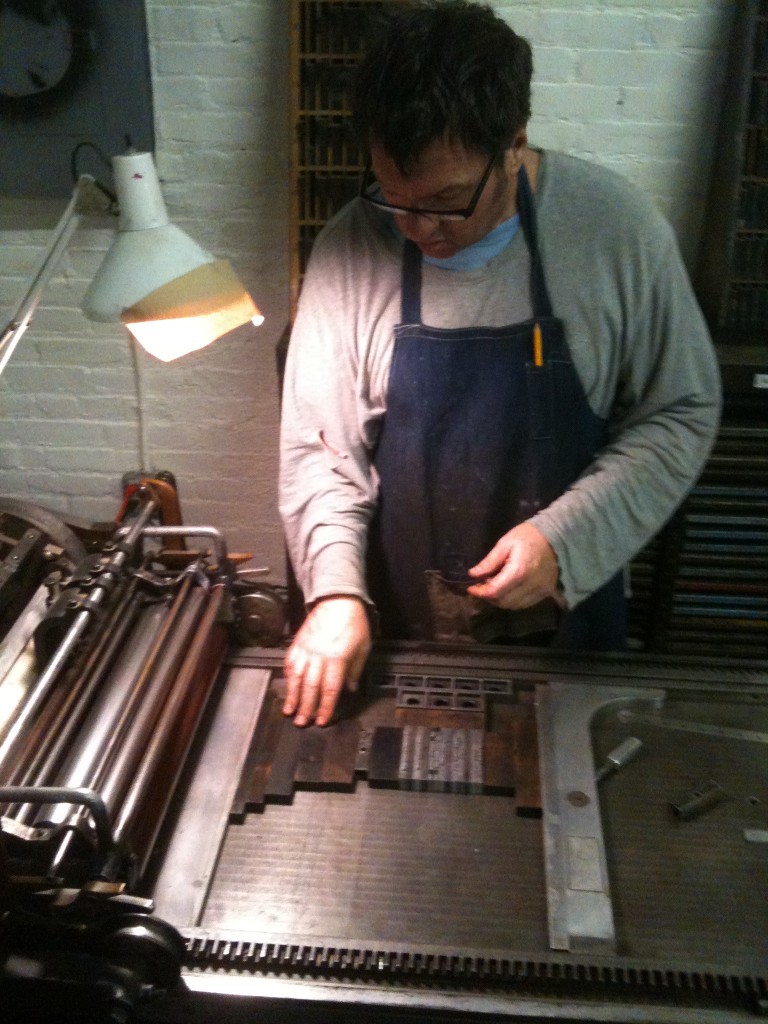
The book is designed; the type is set.
Target publication date for To Sherri O’Brien From Morrell Park in Northeast Philadelphia is Spring, 2009.