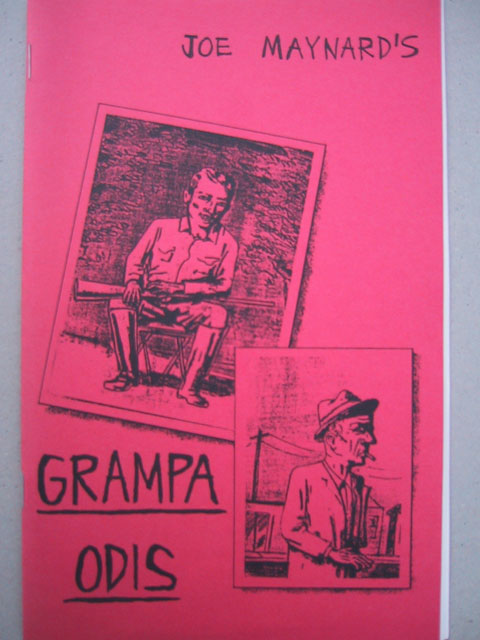
I’m not entirely sure how or when I first came across Joe Maynard. Probably at Tower Records.
What I do know is that I knew Beet before I knew Joe. I’m pretty sure I tracked him down after reading Tsaurah Litzky’s “Blessing Poems” in one of the magazine’s issues. Beet was one of those small literary magazines that seemed to arrive from another world the way things did before everyone went online—smart, funny, handmade, and entirely unconcerned with literary fashion. Joe did a terrific job with it.
Before long, Joe and I struck up a correspondence. This was before social media, before Substack, before any of the shortcuts we take for granted today. If you liked someone’s work, you wrote them a letter. Sometimes they wrote back. Joe did.
We exchanged letters for a while and even tried to meet for a beer when I was in New York for the 1995 Kerouac Conference. Somehow it never happened. Life got busy, years passed, and we drifted out of touch.
Then, more than twenty years later, I finally met Joe.
By then he had become a rare book dealer, and we found ourselves occupying the same corner of the world again: an Antiquarian Book Fair in New York City. Every year the fair takes over the basement of the church at Lexington Avenue and 66th Street, and there was Joe. After all those years, the guy behind Beet was suddenly standing right in front of me: Joe as a seller and I was buying.
One of the great pleasures of the book world is discovering that the people whose magazines, books, and letters meant something to you decades earlier are still out there. In addition to Beet, Joe published another cool little magazine called Pink Pages, devoted to erotica and other literary misbehavior. It was exactly the sort of publication that thrived outside the mainstream and developed a loyal following because of it.
One biographical note I found years ago described Joe this way:
“His poetry and fiction have appeared in Long Shot, Lungfull, and Exquisite Corpse, among other places. His entire life is contained within four square miles between Brooklyn, Queens, and Manhattan, with only an occasional leak here and there.”
That’s about as perfect a small-press biography as you’re likely to find.
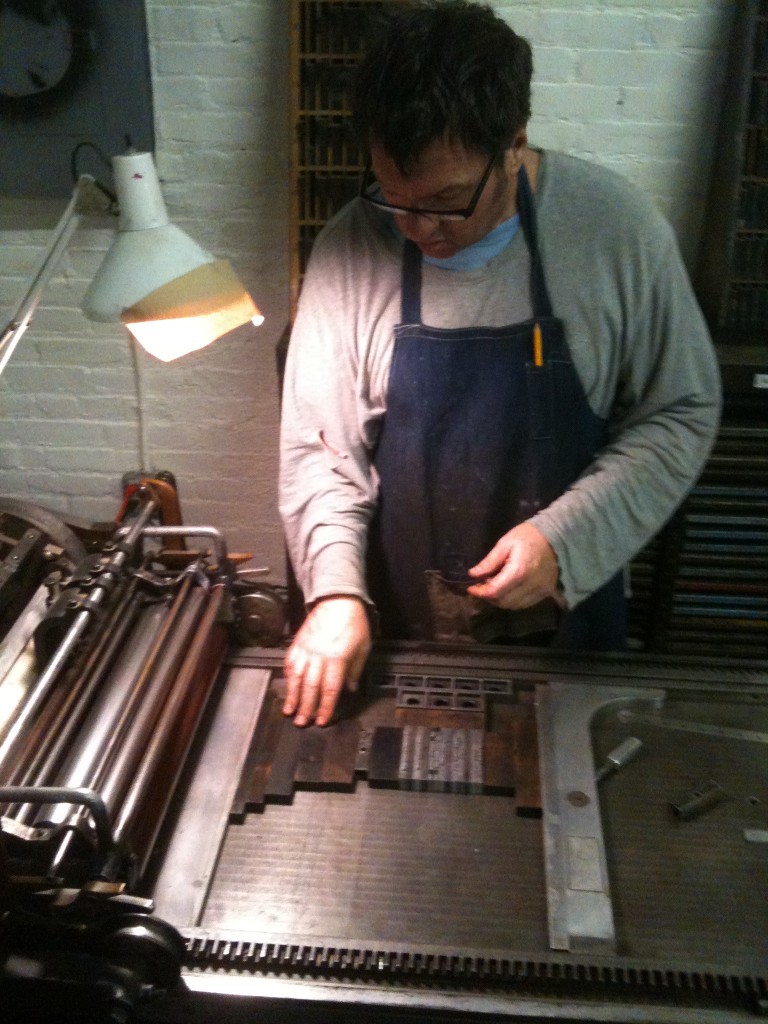
Grampa Odis was Joe Maynard’s book for the synaesthesia press. It’s long out of print now. I honestly can’t remember how many copies I printed, which probably tells you everything you need to know about those early years. We weren’t thinking about inventory management or future collectibility. We were simply making books we wanted to exist.